A dedicated kitchen faucet can use an under-sink reverse osmosis unit. A whole-house RO is a point-of-entry design. Those are different jobs, different discharge needs, and different maintenance. Clear Water Pros SD connects you with a licensed water-treatment pro. The brand does not install membranes itself.
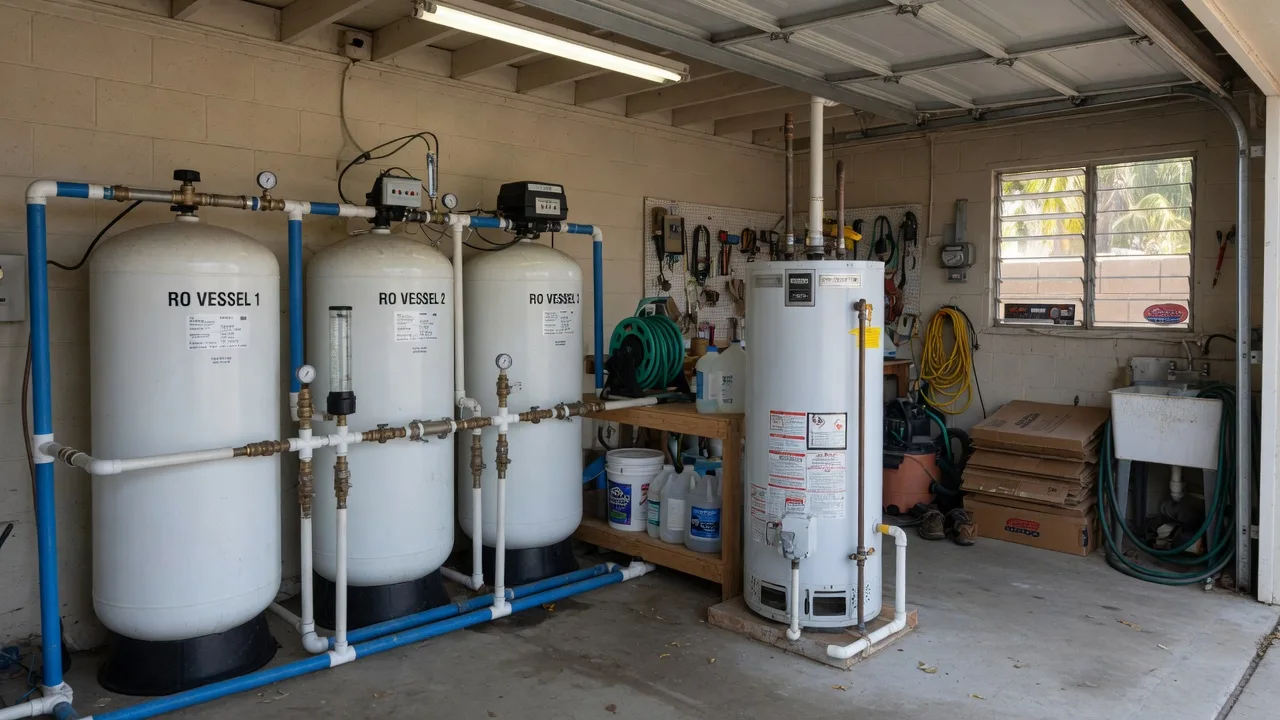
Point of use versus point of entry
NSF’s home-treatment pages, already on our claims ledger, draw the line this way. Point-of-entry systems treat water entering the residence. Point-of-use devices treat a selected tap. NSF/ANSI 58 covers reverse osmosis systems. A standard is not a ranking. It does not prove reduction of every contaminant. Check the exact model’s certified reduction claims.
EPA’s November 2024 home-treatment guide says no single technology removes every contaminant. Compare point-of-use and whole-house scope, certified claims, maintenance, and water consumption. An RO system produces treated water and reject water. Performance and efficiency are model-specific.
An under-sink reverse osmosis system treats its selected tap. A point-of-entry system treats water entering the residence and serves the downstream plumbing included in its design. Discharge capacity, pressure, pretreatment, storage, bypassed branches, and maintenance all belong in the written scope.
Reject water is part of the design
EPA’s WaterSense consumer page for point-of-use RO says labeled units demonstrate at most 2.3 gallons of reject water per gallon treated under its criteria. That is a label criterion, not every system’s field performance. EPA also gives a typical point-of-use example of five or more reject gallons per treated gallon, and up to ten for some inefficient units. Those are national examples, not a measurement of a San Diego install.
A point-of-entry design serves more water than one drinking tap. The licensed pro has to size drain, pressure, storage, and pretreatment against the actual house. Do not copy a kitchen-faucet waste ratio onto a garage plant.
RO can lower treated-water pH in treatment applications, per EPA’s treatment-technology overview. There is no universal household output pH on our ledger. Exact feedwater, model, and maintenance control the output.
Hardness is still a separate San Diego job
City of San Diego drinking water typically averages about 16 grains per gallon on the City plumbing page, with variation by area and water demand. That figure is for the City system only. The 2025 Consumer Confidence Report lists plant hardness that is different: Alvarado averaged 13.8 grains, Miramar 14.1, Otay 14.2, purchased treated water 8.5. Helix says 10 grains or more is hard, and the imported supply it discusses averages about 14 grains. Do not copy City 16 onto La Mesa.
A softener removes hardness ions. An RO membrane has model-specific contaminant claims and operating requirements. Water softener and reverse osmosis together is a two-scope conversation. On a well, test first and match any pretreatment, including a sediment filter, to the identified problem. A well in Ramona is not a City tap.
EPA’s cost categories, already on the ledger, put pitchers and tap filters typically under $100, RO or distillation at a few hundred dollars and possibly professional installation, and point-of-entry systems in the thousands and generally requiring professional installation. Those are national categories, not a San Diego quote and not a Clear Water Pros price.
Frequently asked questions
Will whole-house RO replace a water softener?
Only if the exact model is designed and certified for that job. Ask whether hardness reduction is an exact certified claim and get the treatment scope in writing.
Does a WaterSense label apply to a garage plant?
The 2.3 reject figure we hold is from EPA’s point-of-use WaterSense page. Do not treat it as a whole-house field guarantee.
Can I skip the drain if I have a septic tank?
No. The written design needs an approved route for reject water. EPA also says to check with the septic manufacturer or service provider before adding a softener on a septic property. Whole-house RO is a separate discharge conversation for the licensed pro and the authority that governs the parcel.
Call a licensed pro
If every tap is the goal, bring the utility report or the well lab sheet and ask for point-of-entry versus under-sink in writing. Call (858) 400-4647 and Clear Water Pros SD will connect you with an independent local water-treatment professional.