A Carmel Valley house can usually accommodate a water softener without a preinstalled loop. The licensed pro must find a workable connection point, plan the discharge, and separate any lines that shouldn’t receive softened water.
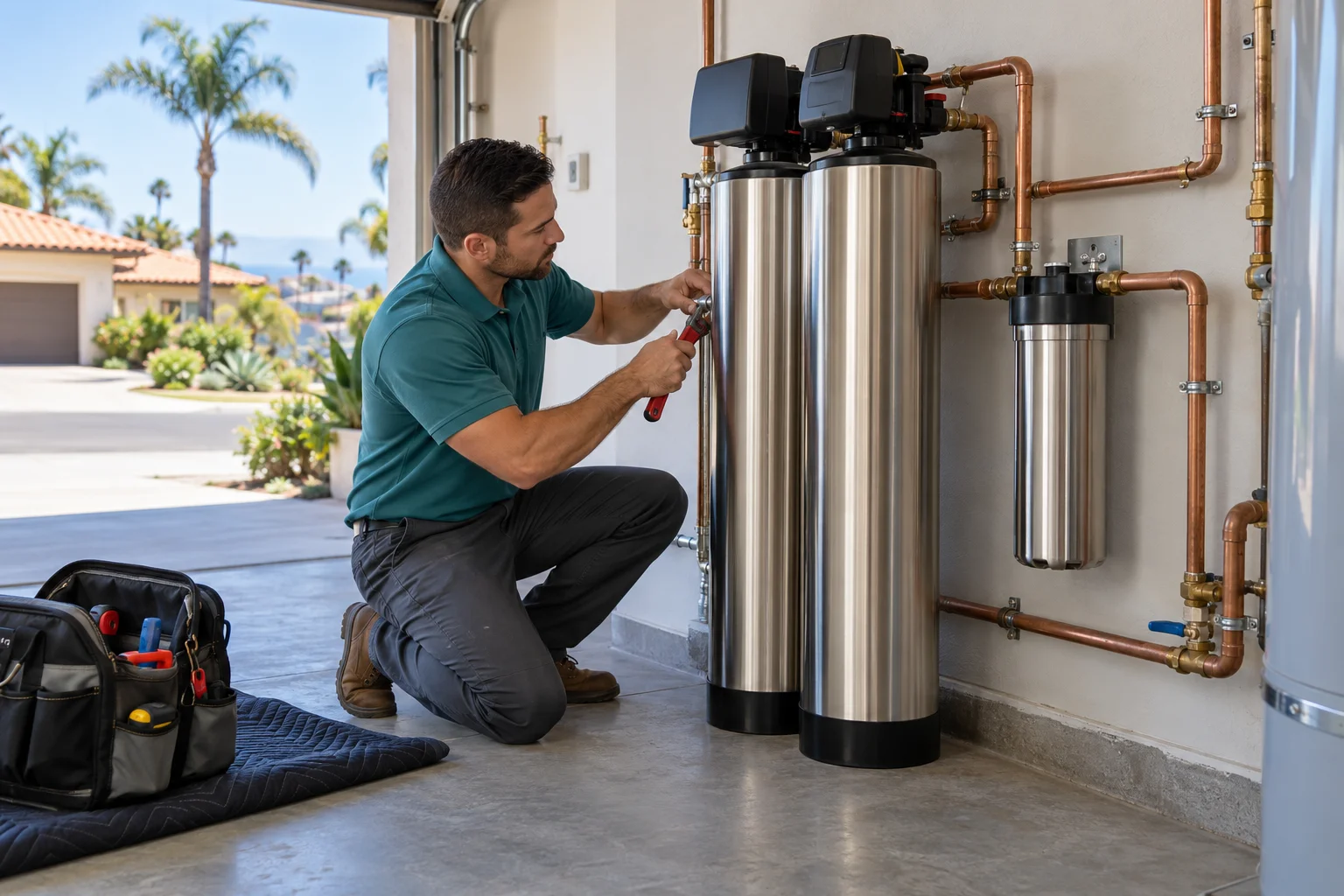
What a softener loop does
A softener loop is a planned section of plumbing for adding treatment equipment. It commonly provides an accessible supply connection and a return connection. The arrangement lets an installer route household water through the softener without rebuilding as much of the existing plumbing.
Builders don’t place every loop in the same location. A pro may look near the water heater, garage plumbing, or another service area. A loop can resemble two capped pipes coming from the wall, but exposed pipes alone don’t confirm their purpose. One might serve a drain, irrigation, hot water, or another fixture.
Before choosing equipment, the pro should trace the home’s actual plumbing. The inspection should identify:
- Where water enters the house
- Which line supplies interior fixtures
- Whether irrigation branches off before that line
- Where the softener could sit
- How the unit would drain during regeneration
- Whether nearby power is required by the selected model
- How the equipment can be bypassed for service
Don’t rely only on a seller’s listing or an old inspection report. Later remodeling may have changed the piping. A licensed pro can trace the lines and explain the proposed route before quoting the work.
If you’re still checking whether equipment already exists, see how to identify a water softener. A bypass valve or brine tank can reveal an older setup that isn’t obvious from the main plumbing area.
How installation works without a loop
Without a loop, the installer needs another way to intercept the household supply. One possible plan is tapping the main line near an accessible hose bib, water heater, or garage wall. The right location depends on where the plumbing branches and which fixtures should receive treated water.
The goal isn’t simply finding the nearest pipe. The pro must confirm that the selected line serves the intended indoor fixtures. Connecting after a branch could leave part of the house untreated. Connecting too early could send softened water to outdoor irrigation.
Many homeowners prefer to leave irrigation unsoftened. That can require separating the landscape branch from the household line. The existing layout determines whether that separation is simple or requires added piping.
The equipment also needs enough physical space for operation and maintenance. The exact model instructions control clearances, bypass placement, and installation details. EPA guidance also says a softener should be sized using measured hardness and household water use. Irrigation demand should be excluded when appropriate. Oversizing can waste water.
Demand-initiated regeneration responds to actual use and hardness instead of relying only on a fixed timer. When comparing systems, review the exact model’s NSF/ANSI 44 certification, rated working capacity, and water and salt efficiency. Certification under that standard applies to ion-exchange softeners that reduce calcium and magnesium hardness. It doesn’t rank every system or prove unrelated contaminant reduction.
Our water softener installation service connects homeowners with licensed providers who can inspect the layout and prepare the installation scope.
Drainage and the air-gap question
A salt-based softener discharges water during regeneration. That means the installation plan needs an approved drain route, not just supply connections and space for the tanks.
The exact California Plumbing Code section and arrangement governing a particular San Diego installation couldn’t be confirmed from the approved sources for this page. Don’t accept a generic diagram as proof that a drain connection is allowed. Ask the licensed pro to identify the proposed discharge point, required air gap, and applicable code before work begins.
An air gap physically separates discharge tubing from the receiving drain opening. The final configuration depends on the property, drain location, equipment instructions, and local inspection requirements. A laundry connection, floor drain, standpipe, utility sink, or exterior route shouldn’t be treated as automatically acceptable.
Ask the provider to show these items in the written scope:
- The discharge route
- The receiving drain
- The planned air-gap arrangement
- Any wall, cabinet, or concrete access
- How the drain line will remain visible and serviceable
- Whether a permit or inspection changes the plan
The EPA’s softener guidance says installers should follow model-specific drain, bypass, and maintenance instructions. It also notes that persistent drain flow can indicate a malfunction. That makes an accessible, correctly planned drain useful after installation too.
For properties with onsite septic, EPA advises checking with the septic manufacturer or local service provider about system performance, overload, and warranty implications. That guidance doesn’t mean every septic property needs the same setup. See our guide to softener discharge and septic systems for that separate planning issue.
Permits for a City of San Diego address
The City of San Diego lists water-softener installation among work that may qualify for a Simple No-Plan Plumbing/Gas Permit at eligible properties. The permit route depends on the project scope. Historic-property rules can also change the process.
That City guidance isn’t a countywide rule. San Diego County includes separate cities and unincorporated areas, each with its own permitting authority. Even within the City, related plumbing changes may place a project outside the simple route.
For a Carmel Valley property, confirm the jurisdiction tied to the exact address. Then ask the provider which permit path applies to the proposed plumbing plan. The person quoting the work should explain whether new piping, drainage, wall access, or other changes affect that answer.
Don’t rely on an installer’s general statement that softeners never need permits. Ask for the current rule from the authority handling the address. Our broader San Diego County softener permit guide explains why the jurisdiction matters.
Installation work should be handled by an appropriately licensed provider. You can check a contractor’s license status through the California Contractors State License Board. Confirm that the license belongs to the business named in the contract. The homeowner contracts with and pays that provider directly.
Clear Water Pros SD is a referral service. We arrange the water test and connect homeowners with separately licensed pros. We don’t perform the installation or pull permits.
What the missing loop adds to the quote
There’s no verified flat surcharge for adding a softener without a loop. The added cost couldn’t be confirmed because it depends on the actual plumbing route and written scope. A provider must inspect the house before giving a meaningful figure.
The quote may change based on pipe access, distance to the installation area, drain access, wall repairs, irrigation separation, permit requirements, and the selected equipment. Two Carmel Valley houses with similar floor plans may have different plumbing after renovations.
Ask for a written quote that separates the equipment from installation work. It should identify:
- The system and exact model
- New supply and return piping
- Irrigation separation, if included
- Drain and air-gap work
- Bypass components
- Permit responsibility
- Wall or surface restoration
- Startup and homeowner instructions
- Replacement-filter and maintenance costs
Don’t compare totals until the scopes match. A lower figure may omit drainage, permitting, restoration, or the work needed to leave irrigation untreated. Ask whether later changes require a written approval before the provider proceeds.
The system choice should follow the water concern. The City of San Diego says its drinking water typically averages about 16 grains per gallon, while varying by area and water demand. That City figure doesn’t describe every county water system or private well. Check the serving utility’s current report and measure the water at the address.
A free in-home water test can help define the hardness concern. Confirm the test’s scope with the provider. An in-home test isn’t a blanket safety clearance or a substitute for certified laboratory analysis.
When to call us
Call when a missing loop, uncertain drain route, or mixed irrigation plumbing requires an on-site plan from a licensed Water Filtration pro. Clear Water Pros SD can arrange the test and connect you with a provider who will inspect, quote, and perform the work.
Call us at (858) 400-4647 to set up a free in-home water test.