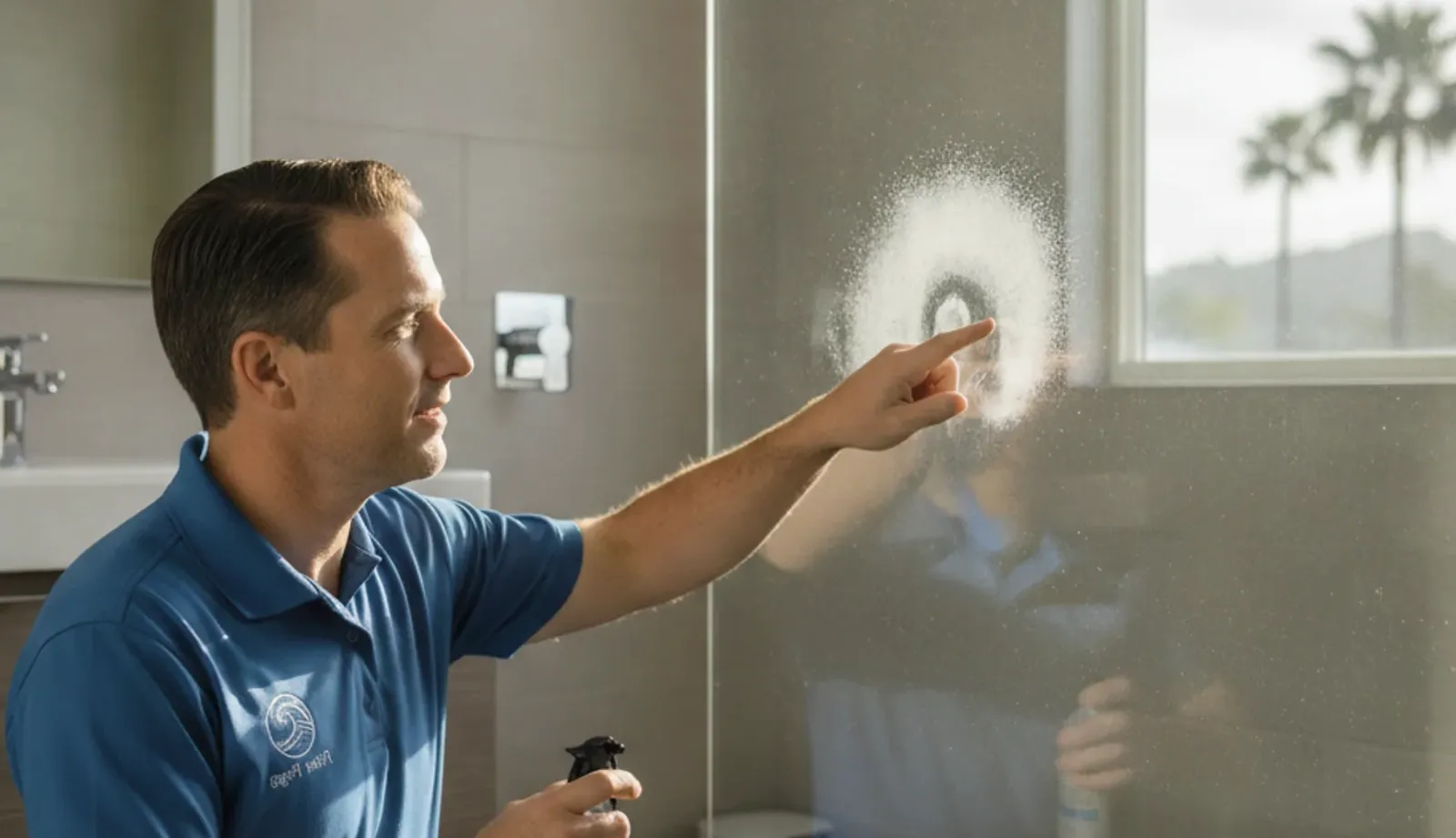
Hard water spots are the one housekeeping problem in San Diego that no amount of scrubbing solves. The white film on shower glass, the haze on faucets, the chalky ring in dishwashers: all the same thing. It is leftover scale, mostly calcium and magnesium, that dries on the surface. The city supply carries a heavy load of both, and the same minerals that leave those stains also build up inside water heaters and pipes. The only way to stop the cycle is to treat the water before it reaches the surface.
Why San Diego water leaves so much scale
The City of San Diego publishes an average hardness of about 16 grains per gallon. The working range runs 16 to 18 grains per gallon, depending on your area and system demand. That sits well past the 10.5 gpg line the U.S. Geological Survey uses to mark “very hard” water. Most of the supply is imported from the Colorado River and from Northern California. Both sources pick up calcium and magnesium as they travel. When a drop of that water dries on a tile wall, the water disappears but the minerals stay. The harder the source water, the faster the film builds up. That is why a clean San Diego shower door looks foggy again within days. For a neighborhood-by-neighborhood look at the numbers, see our guide on hard water in San Diego.
The chemistry of stain removal
Acids dissolve mineral scale. That is the whole trick. White vinegar works because it contains acetic acid, and most homes already have a jug in the pantry. The acid reacts with calcium and magnesium and breaks the bond holding the film to the surface. It lets you wipe the residue away without hard scrubbing that can scratch glass or chrome. Commercial descalers like CLR do the same job with a stronger acid blend. They handle scale that vinegar leaves behind, and they work faster, but the active chemistry is the same.
A simple method that works on most stains
Start with a 50/50 mix of white vinegar and water in a spray bottle. Use it on light film across glass doors, faucets, and chrome. Spray, let it sit for a few minutes, then wipe with a soft cloth. For heavier buildup, pour undiluted white vinegar into a bowl. Soak a cloth or paper towel in the vinegar and lay it on the stain. Keep it wet for 10 to 30 minutes. The longer soak gives the acid time to work through thick scale. Wipe, then rinse with clean water and dry the surface. A baking soda paste on a soft cloth adds gentle scrubbing power. It helps on spots the vinegar loosens but does not lift. Baking soda is a mild abrasive, so use it on glass and metal, not on glossy finishes.
Surfaces where acids cause harm
Two cautions matter. Skip vinegar and any acid cleaner on natural stone, including marble, granite, and travertine. The acid etches the surface and leaves a permanent dull spot. Use a stone-safe cleaner instead, and seal stone regularly to slow future buildup. On shower doors that have been spotty for years, cleaning lifts the film but cannot undo etching. Damage already carved into the glass stays. At that point the only fix is replacement, which is one more reason to deal with the water itself.
Why the stains keep coming back
Cleaning removes the deposit. It does not remove the minerals in the water. Every time a faucet drips, a shower runs, or a dishwasher drains, fresh hard water lands on a surface and dries. The next white film is already on the way before you finish wiping the last one off. This is the part that frustrates San Diego homeowners. It is also the honest reason no spray bottle is a permanent answer. The stains are not something you can scrub away for good. The cause is the water itself, not the surfaces it lands on. The lasting fix is to treat the water before it ever reaches the glass.
Damage that hides behind the visible film
The white film you can see is cosmetic, at least at first. The same calcium and magnesium cause real trouble where you cannot see them. Scale coats the inside of water heater tanks, dishwasher lines, and coffee maker elements. That shortens service life and raises energy use. Faucet aerators and showerheads clog with mineral buildup that cuts flow and leaves fixtures looking permanently dull. None of this is a health risk. The cost adds up over the years in replaced appliances and early fixture swaps. For a deeper look at where the money goes, see hard water effects on your home.
Two ways to treat the water instead of the stains
A water softener is the complete fix. It uses ion exchange to swap calcium and magnesium for sodium or potassium. The water leaving every tap no longer carries the minerals that leave scale behind. Most homeowners see the spotting stop within a few days, and they also notice softer skin and less soap scum. Our guide to the best water softener for San Diego hard water covers what to look for. Water softener cost in San Diego breaks down the numbers. A salt-free conditioner takes a different approach. It does not remove the minerals. It changes their structure so they bond less to surfaces and pipes. You still get scale reduction and skip the salt and brine tank. Some spotting can remain, since the calcium and magnesium stay in the water. The two paths side by side are covered in water softener vs salt-free conditioner.
Picking the right path for your home
The best match depends on your actual hardness, your tolerance for salt, and what you want to protect most. A water softener installation gives the most complete answer for stains, scale, and appliance life. A salt-free conditioner fits homes that want scale reduction without adding sodium or maintaining a brine tank. Every recommendation starts with a free in-home water test that measures your real hardness in grains per gallon. That way the system is sized to your water and not a county-wide average. Clear Water Pros SD connects homeowners across San Diego County with vetted, separately licensed local water treatment professionals. Service runs from coastal cities like La Jolla to inland neighborhoods. From there the matched pro handles the sizing, the install, and the follow-up.
Frequently asked questions
What is actually leaving those white marks on shower glass?
They are calcium and magnesium left behind when hard water evaporates. San Diego tap water sits in the 16 to 18 gpg range. Each drop leaves a heavy mineral film on any surface where it dries.
Does white vinegar really get rid of hard water spots?
Yes. The acetic acid in white vinegar dissolves the mineral scale. Most light stains wipe away after a 10 to 30 minute soak with undiluted vinegar. Avoid vinegar on marble, granite, and travertine, since the acid etches natural stone.
Why do my hard water spots always come back?
Cleaning gets the deposit off, but it does not touch the minerals still in the water. Each new drop of hard water dries and leaves fresh scale. The cycle keeps going until the water is treated.
Will a water softener get rid of hard water stains completely?
Yes. A softener uses ion exchange to remove calcium and magnesium before the water reaches the tap. The water that hits your shower glass no longer leaves scale. Most homeowners see the spotting stop within days of install.
Can hard water stains become permanent on shower glass?
The mineral film is not permanent and cleans off with an acid. Long-term buildup can etch the glass itself, though, and etching cannot be reversed by cleaning. Treating the water early keeps the surface clear.
When to bring in a local pro
If spotting keeps coming back the same week you clean, the next step is a professional water test. The same goes for scale building up on faucets and inside appliances. A separately licensed local pro can measure your real hardness, match the right system, and handle the install. Call (858) 400-4647 and Clear Water Pros SD will connect you with an independent local water-treatment professional.