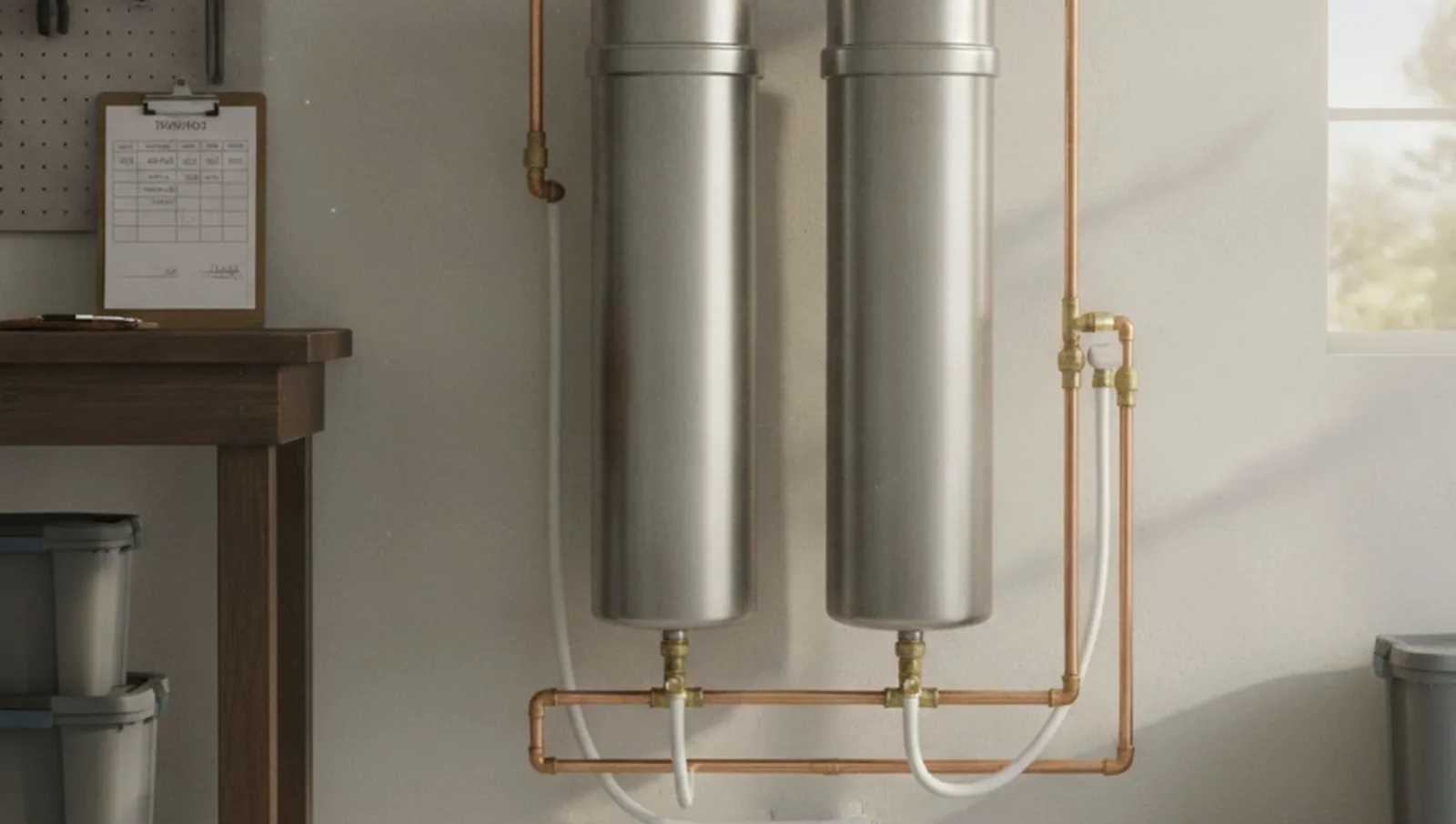
A San Diego homeowner comparing water softener quotes usually sees a wide range. The spread comes from equipment, plumbing, permits, and what each proposal actually includes. The single reliable number for a specific home sits in the independent licensed provider’s written estimate.
San Diego pricing context
The EPA released a national guide in November 2024 covering point-of-entry treatment. It places whole-house systems broadly in the thousands of dollars and states that professional installation is generally required. That figure is planning context, not a San Diego quote. Local conditions, household demand, and the equipment’s specification push a given project up or down.
What actually moves the price
A handful of inputs shape every proposal a homeowner receives.
Measured hardness at the tap. Equipment should be sized from a real hardness reading and the home’s water use, not a generic household rule. EPA guidance recommends excluding irrigation demand where appropriate, since it doesn’t pass through the softener. Oversizing a unit wastes water and salt over the softener’s life.
Treatment technology. Ion-exchange softeners swap calcium and magnesium for sodium or potassium, and they need a drain, a power source, and periodic salt refills. Salt-free conditioners don’t remove hardness ions. They alter how scale forms, and their performance claims are model-specific. Each path has different install and ownership costs.
Plumbing layout and installation point. Older copper, tight closets, crawlspace runs, and the need for a bypass valve all add labor. A bypass on the main line is standard practice for service.
Permit and discharge rules. Permit eligibility depends on the property and on the local jurisdiction. The City of San Diego lists qualifying softener work under its Simple No-Plan Plumbing/Gas Permit route. Confirm the current rule for the exact address before locking in a model.
Capacity and household demand. A larger family with high hardness needs a unit with more rated working capacity. The capacity rating on the specification sheet, not the unit’s physical size, drives this number.
Tank and component specification. The proposal should name the manufacturer, model, tank material, valve type, warranty terms, and parts replacement schedule. A material label alone doesn’t prove longer life or better water.
Add-ons. A point-of-use reverse-osmosis tap at the kitchen sink changes the install and the maintenance load. Compare its certified reduction claims, the replacement element schedule, the service terms, and the water it uses.
Comparing equipment types side by side
The right fit comes from measured hardness, household water use, and the specific treatment goal. Two written proposals for the same home can differ by thousands when one is undersized or skips the bypass.
| System type | Upfront scope to confirm in writing | Ongoing scope to confirm in writing |
|---|---|---|
| Salt-based ion exchange | Equipment make and model, working capacity, bypass, drain routing, labor | Salt, regeneration water, model-specific parts, scheduled service |
| Salt-free conditioner | Make and model, documented scale-reduction claim, working capacity, bypass, labor | Media replacement at the manufacturer’s interval, service visits |
| Combination with point-of-use RO | Both systems, plumbing tie-ins, commissioning | RO replacement elements, service, RO water use |
How installation pricing plays out
Installation cost is a separate line from equipment cost, and a line-item estimate tells the real story.
Common items that raise install cost:
- The main line needs rerouting or a new bypass valve
- The chosen location is a tight closet, an outside wall, or under a counter
- A crawlspace or attic run adds labor hours
- Old equipment has to be removed and hauled away
- Copper-to-PEX transitions need different fittings than a same-material job
A licensed provider should state the expected time on site in writing. The provider inspects the home before quoting, so a phone estimate is a placeholder at best. For a closer look at what install day covers, see the local overview for water softener installation in San Diego.
Clear Water Pros SD is a referral network, not an installer. We connect homeowners with independent, separately licensed water-treatment professionals. The provider handles the site visit and the written quote, including equipment, labor, exclusions, and any conditions that could change the price. Our guide to choosing a water softener company in San Diego walks through questions to ask each candidate.
Salt-free versus salt-based: the cost view
The two paths don’t produce a clear cheaper answer. The comparison depends on the exact models under review.
A salt-based ion-exchange softener consumes salt and a small amount of regeneration water on each cycle. The proposal should show the rated working capacity, the salt and water efficiency, the expected regeneration pattern for the home’s measured demand, and the maintenance schedule.
A salt-free conditioner skips the salt but does carry model-specific media and service costs. The manufacturer’s instructions should list the media replacement interval and the service expectations.
Local rules can push the choice in one direction. Confirm permit and discharge rules for the property before committing to salt-free water conditioning or to ion exchange.
For a home on onsite septic, EPA guidance suggests checking with the septic system manufacturer or a local service provider about overload, warranty, and performance before adding a softener.
What ownership costs over time
Ongoing costs vary widely by system type and by the home itself.
A salt-based system carries salt, regeneration water, scheduled service, and model-specific parts. A salt-free system carries its own media or component replacement and service. A point-of-use RO add-on carries replacement elements and the water it sends to drain.
No system has a universal ten-year cost advantage. Compare the actual models under proposal on salt or media spend, water use, service, replacement parts, and warranty terms. A side-by-side sheet built from the written quotes makes the comparison honest.
For water softener repair, an independent provider can confirm whether it services the home’s exact model and address, what a visit covers, and how follow-up work is priced.
Is treatment worth it for this home
Worth depends on measured hardness, the household’s priorities, and the specific written proposal.
Hardness contributes to scale on fixtures, glass, and water-using appliances. A field hardness result frames the conversation about treatment, but it doesn’t predict appliance life or a financial payback.
Treatment tends to fit when:
- The measured hardness and visible scale match the treatment goal.
- The specific model has a documented claim that suits that goal.
- The written proposal shows install, maintenance, and replacement costs.
- The household prefers the treated water’s feel and accepts the operating requirements.
A softener is a water-characteristics choice rather than a health device. There is no guaranteed payback. Compare the full written ownership cost with the household’s priorities, not with a generic return claim.
If the home is rented, or a sale is close, the math shifts toward a portable or point-of-use option. An independent provider can run a free in-home water test covering specified field measurements. Ask which measurements the test includes before booking. Use the serving utility’s current report and an appropriate lab analysis for contaminant questions, then confirm the equipment’s specific claims before choosing.
For North County pricing patterns, water softener installation in Carlsbad gives a sense of local conditions. Verify the serving utility and the measured hardness at the actual address rather than applying one countywide profile.
Frequently asked questions
How much does a water softener cost installed in San Diego?
EPA’s November 2024 national guide places point-of-entry treatment broadly in the thousands and notes that professional installation is generally required. The actual installed price for a specific home comes from the independent licensed provider’s written estimate.
What is the cheapest water softener option for a San Diego home?
No single option is cheapest for every home. Compare correctly sized models, included labor, water and salt efficiency, maintenance, and any property rules that affect equipment choice.
Do I need a permit to install a water softener in San Diego?
Permit needs depend on the jurisdiction, the property, and the work scope. The City of San Diego lists qualifying softener work under its Simple No-Plan Plumbing/Gas Permit route. Ask the licensed provider to confirm the current route for the specific address.
How long does a water softener last?
Service life and replacement timing are model- and water-specific. Compare the manufacturer’s instructions, the warranty terms, the rated capacity, and the documented replacement costs.
Can a homeowner install a water softener in San Diego?
Check the manufacturer’s installation instructions and warranty terms, then confirm the permit rules for the specific address with the local authority. A licensed provider can assess the plumbing, document sizing from measured hardness and actual water use, and state who pulls permits and finishes the connections.
Are salt softeners restricted in San Diego?
Rules vary by jurisdiction and property. Confirm the current permit and discharge rules for the address before selecting equipment, and don’t assume a countywide restriction or exemption.
What is the cost difference between a water softener and a water conditioner?
Ion exchange uses salt and regeneration water and removes hardness ions. Salt-free conditioning doesn’t remove hardness ions and has model-specific maintenance. For a home on septic, consult the septic manufacturer or a local service provider before choosing.
Talk with a local water-treatment professional
A water softener is a real investment, and the right answer depends on the home, the water, and the written proposal. An independent licensed professional can measure the water, scope the plumbing, and put a real number on the table. Call (858) 400-4647 and Clear Water Pros SD will connect you with an independent local water-treatment professional.