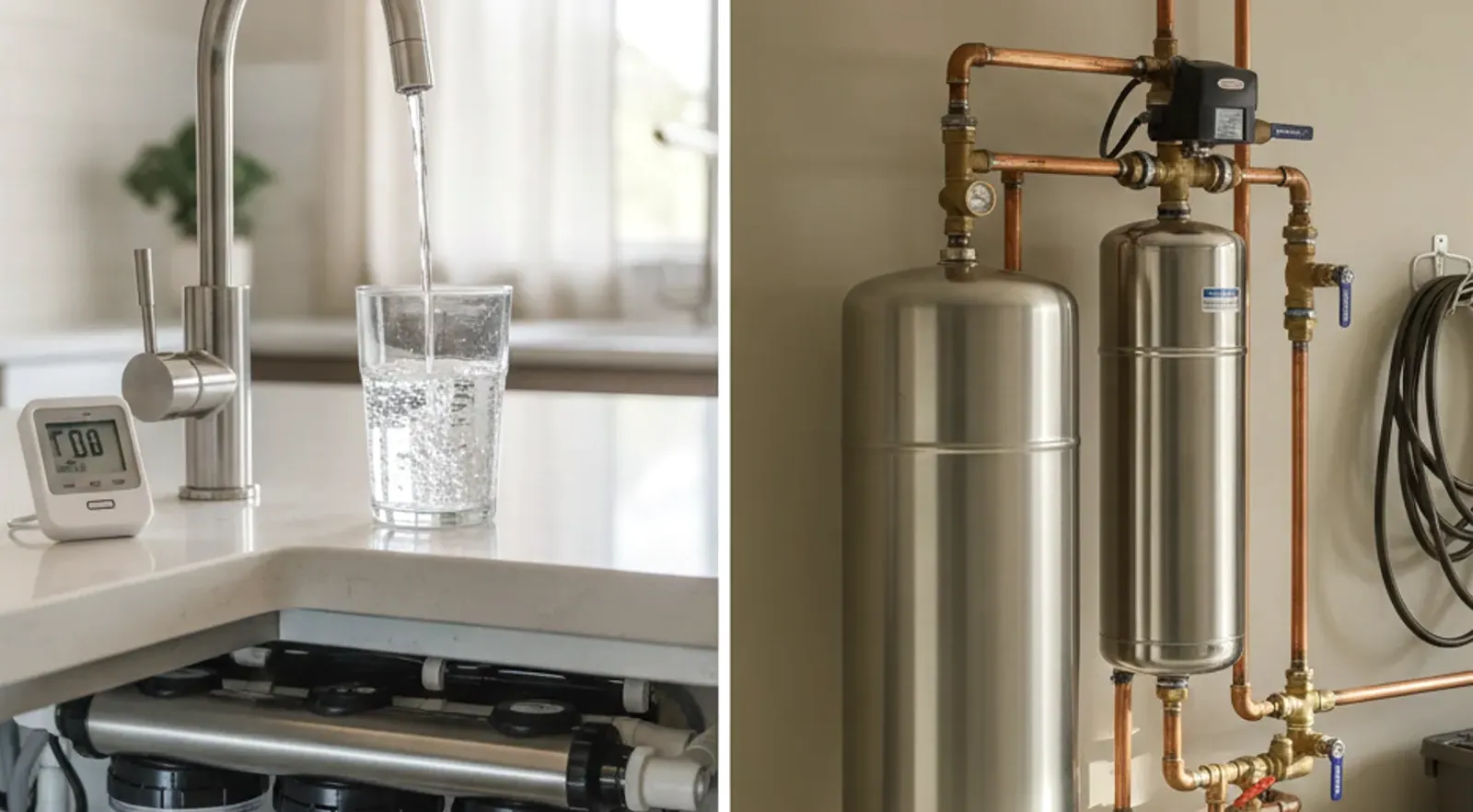
Choosing between hardness control and drinking water purification
San Diego County residents often ask about water softener vs reverse osmosis systems. These two technologies solve completely different problems around the house. One conditions the entire plumbing network, while the other purifies a single tap. You might require one, both, or neither depending on your situation. Start by defining your exact water concern before buying any equipment. Check the current report from your serving utility first. Order appropriate laboratory testing if you have specific worries. Verify the certified claims of any model you consider.
A softener uses ion exchange to address calcium and magnesium. It connects directly to your main water line. Conditioned water then flows to every fixture on that supply. A point of use reverse osmosis unit mounts under the kitchen sink. It only treats the water coming out of one dedicated faucet. That purified water serves your cooking and drinking needs. The shower and dishwasher receive no benefit from that under sink unit.
The City of San Diego reports its drinking water averages about 16 grains per gallon. That number ranges from 16 to 18 depending on demand and the area served. This figure does not apply to every county water system. Private wells and individual taps can differ significantly. Always rely on your serving utility report rather than general assumptions. You can also check if San Diego water is hard for more local context.
How ion exchange handles mineral buildup
Resin beads inside a softener swap out hardness minerals. Calcium and magnesium leave the water during this exchange. Compare the working capacity of any model against your household demand. Measured hardness levels dictate how large the unit must be. Reducing hardness does not guarantee a longer lifespan for appliances. It also does not eliminate every possible cause of spotting on glassware.
NSF/ANSI 44 covers ion exchange softeners certified to reduce calcium and magnesium hardness. This standard does not mean the unit removes every contaminant. Some homeowners worry about salt and brine discharge. If that applies to you, compare salt free conditioners by their exact scale reduction claim. Conditioning alters mineral behavior but never actually removes hardness ions. Proper sizing requires accurate measurements of hardness and daily water use. A professional can handle your water softener installation based on those figures.
Properties with onsite septic systems require extra planning. The EPA recommends checking with the septic manufacturer or local service provider. Ask about performance, overload, and warranty implications before proceeding. Discharge rules vary by jurisdiction and scope. Confirm the applicable permit requirements for your specific address.
Purifying a single tap with membrane filtration
Reverse osmosis pushes water through a specialized membrane. This process produces treated drinking water alongside reject water. NSF/ANSI 58 covers these systems, but certification is not a blanket promise. No standard guarantees that every model reduces every contaminant. Match the exact model claims against the concerns in your utility report. An under sink reverse osmosis drinking water system only treats connected outlets. It leaves the washing machine and water heater completely unaffected.
These units can reduce dissolved substances including calcium and magnesium. Actual reduction depends on the specific system and incoming water quality. Operating conditions and maintenance schedules also change the results. Never assume the output is completely mineral free without checking performance data. Sometimes the real issue is a chloramine smell at every faucet. That problem requires a different approach entirely. Read our guide on reverse osmosis vs whole house filtration to explore that comparison.
Comparing the two treatment approaches
| Feature | Ion exchange softener | Reverse osmosis unit |
|---|---|---|
| Installation location | Main water line entry | Under the kitchen sink |
| Target concern | Calcium and magnesium hardness | Substances covered by the exact model claims |
| Coverage area | Fixtures on the treated supply, bypassed lines excluded | Outlets connected to the unit |
| Ideal application | Measured hardness across the served plumbing | A defined point of use treatment goal |
| Verification needed | NSF/ANSI 44 claim, capacity, water and salt efficiency | NSF/ANSI 58 claims, maintenance, and water efficiency |
| Pricing method | Request a written installed quote | Request a written installed quote |
You might need just one of these technologies for your home. A softener addresses hardness across all the plumbing it serves. A point of use unit targets specific contaminants at one selected tap. Your choice depends on treatment scope, maintenance effort, and ownership cost. Evaluate a softener if scale buildup is your primary complaint. Check the utility report or order laboratory testing for drinking water concerns. Then compare the certified claims of specific models. A free in home water test measures limited field parameters. It cannot identify every possible contaminant in your supply.
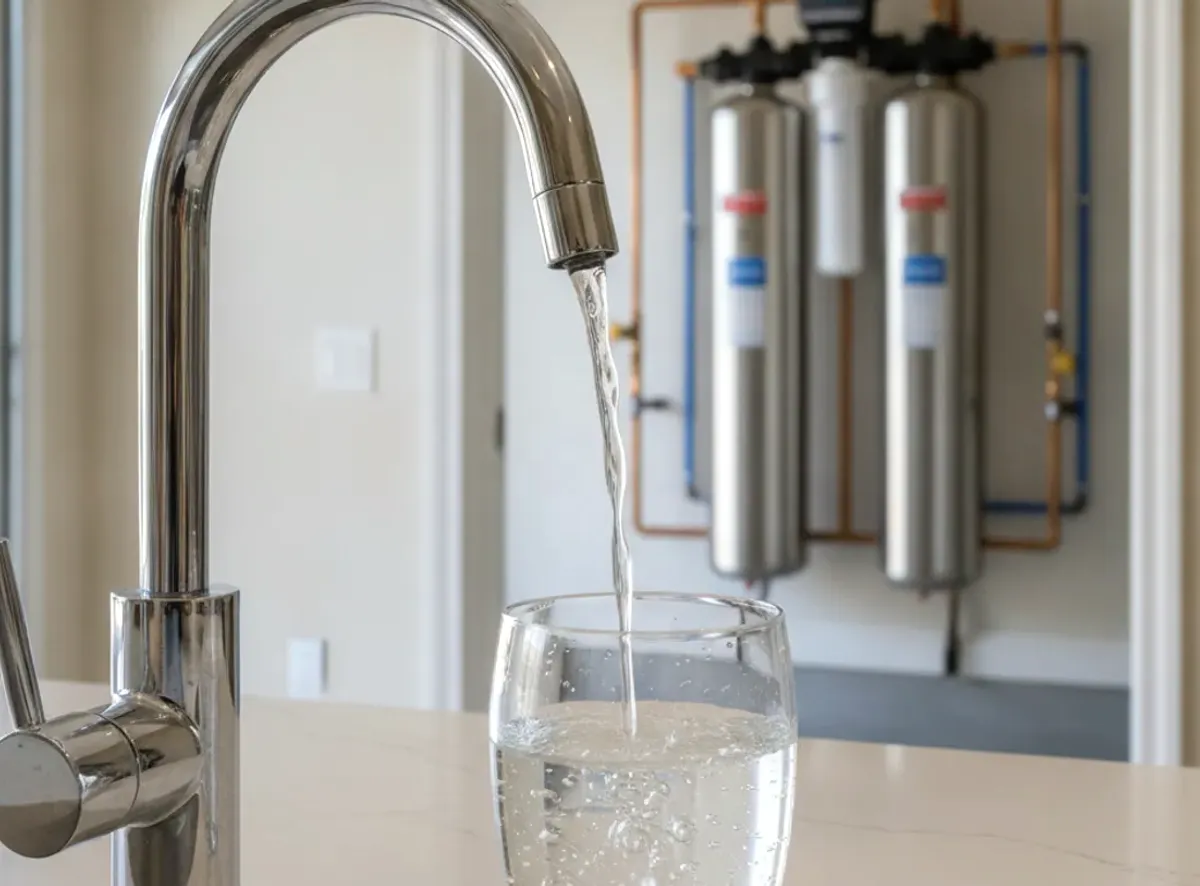
Understanding expenses and efficiency ratings
Installed cost depends on the equipment and work your property needs. Ask providers to separate equipment charges from labor fees. Inquire about permit work when local rules require it. Factor in replacement filters, salt purchases, and scheduled maintenance. Request details on warranty coverage and expected water consumption. For reverse osmosis, compare independently certified exact model efficiency. The EPA says WaterSense labeled units demonstrate no more than 2.3 gallons of reject water per gallon treated under its criteria. Remember that this is a label criterion rather than a field performance guarantee. Every home presents unique plumbing challenges that affect final pricing.
Nobody can prescribe the right combination without seeing your actual water. Hardness levels shift across different service areas and times of day. Rely on address specific measurements for proper sizing. Household size and plumbing age also influence the final decision. Field testing captures limited parameters on site. Use your serving utility report or laboratory analysis for everything else. Clear Water Pros SD is a referral network connecting homeowners with independent professionals. We link you to separately licensed experts across San Diego County. Those local professionals perform all testing and installations.
Getting expert guidance for your property
A separately licensed professional should evaluate your water if you notice scale buildup or taste issues. They can review your utility report and recommend the right equipment for your home. Call (858) 400-4647 and Clear Water Pros SD will connect you with an independent local water-treatment professional.
Frequently asked questions
Are water softeners and reverse osmosis units interchangeable?
They are not. A softener handles hardness minerals throughout the entire house. Reverse osmosis purifies drinking water at one specific faucet. Each technology solves a distinct problem. Neither one replaces the function of the other.
Should I add reverse osmosis if I already own a softener?
That depends on your drinking water goals. Identify the specific concern before purchasing additional equipment. Check whether an exact model carries the applicable certified reduction claim. A softener only holds an NSF/ANSI 44 role for hardness reduction.
Which system makes sense to install first?
Let your measured water quality guide that decision. Scale buildup usually points toward evaluating a softener. Drinking water concerns require utility reports or laboratory testing. Exact model claims should match your identified issue perfectly.
Will softening my water make it safe to drink?
Softening only addresses calcium and magnesium hardness. It does not establish safety for other dissolved constituents. Broader drinking water questions require your serving utility report. Appropriate laboratory testing provides the full picture.