You open the brine tank and the salt looks wet and packed, like wet sand. Hardness is back on the dishwasher. That is often salt mush, not a salt bridge. Clear Water Pros SD connects you with a licensed water-treatment pro. The brand does not scoop tanks itself.
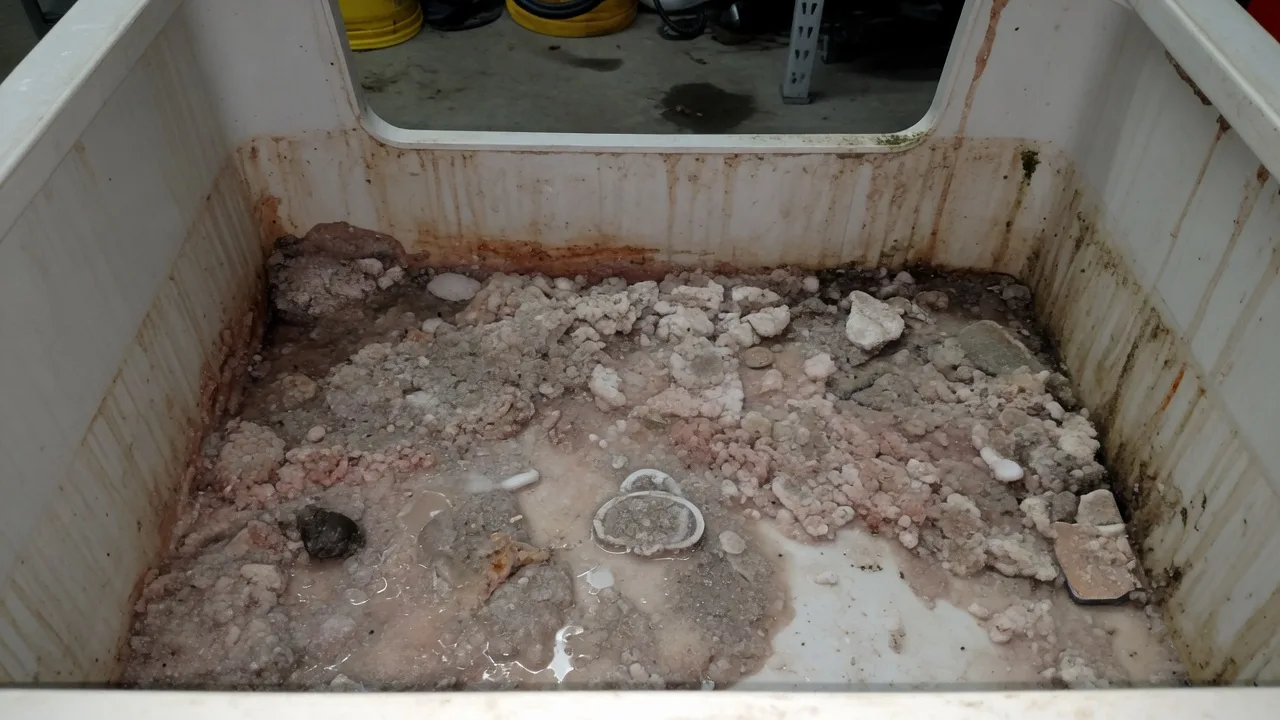
Mush is sludge. A bridge is a shelf.
Culligan’s troubleshooting page, updated September 1, 2026, describes salt mushing as granules that dissolve and recrystallize into a thick sludge at the bottom of the salt tank. That buildup can block brine formation or stop the system from drawing brine.
A salt bridge is different. Rheem’s manual describes a hardened crust that leaves a gap between salt and water. From above, the tank still looks full. Press gently with a wooden, nonmetal tool. Hollow underneath is a bridge. A slide-like formation on the floor is the mush Culligan flags.
Do not use sharp or metal objects.
What mush does to a San Diego unit
The City of San Diego plumbing page reports about 16 grains per gallon for the City system. Helix reports about 14 grains for the imported supply it discusses. A unit that cannot make brine may stop reducing that hardness as intended.
Culligan lists companion clues for mush: standing water in the brine tank, regeneration that does not complete, and a drop in softener performance. A brine tank full of water after a cycle is the usual partner symptom. Unused salt in the pile can still be a bridge, a bypass, or a failed regen.
Wrong or low-quality salt can contribute to mushing. Culligan’s salt guide says rock salt typically holds more insoluble minerals and residue. Kinetico says not to use rock salt. The product still has to match the model manual.
What you can check without tearing the valve apart
Lift the brine-tank lid, not the resin tank. Look for sludge on the floor rather than a crust on top. Culligan says correcting mush may require emptying the tank, discarding the sludge, and refilling with the recommended salt. The process varies by system and can involve heavy material or internal parts. Consult the owner’s guide, or have a licensed pro do it.
Stay off wet electrical gear. Do not open pressurized assemblies. Manual regeneration is a check. If the water level never drops after a cycle, stop and call.
EPA’s May 2026 softener guide says persistent drain flow can indicate a malfunction. That is a different fault from mush. See a softener that keeps running.
Frequently asked questions
Can I just add evaporated pellets on top of the sludge?
No. Fresh salt on top of mush does not restore brine draw. Culligan’s path is empty, discard, refill with the salt the guide names.
Is mush a sign the resin is dead?
Not by itself. Mush is a brine-tank problem. Resin condition is a separate inspection after brine draw works again.
Will a salt-free conditioner get mush?
Salt-free units do not use a brine tank. EPA says they do not remove hardness ions. That is a different product class.
Call a licensed pro
If the sludge is deep, the tank is flooded, or hardness stays after a clean refill, a separately licensed professional should inspect the injector, float, and resin. Call (858) 400-4647 and Clear Water Pros SD will connect you with an independent local water-treatment professional.