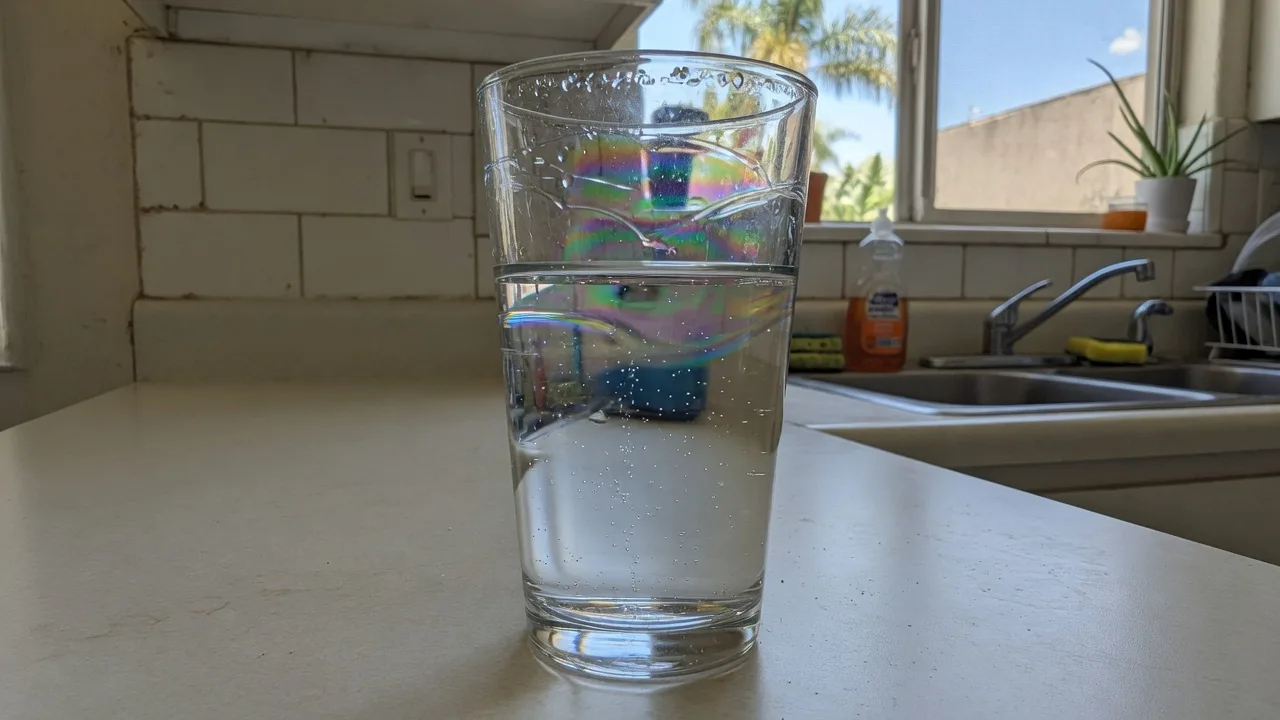
You lift the toilet lid and see a rainbow film. Or a glass of standing well water looks oily. Those looks overlap. The source does not. A Ramona well and a North Park City tap are different jobs. Clear Water Pros SD connects you with licensed water-treatment and well professionals. The brand does not diagnose a sheen from a photo.
On a private well, treat it as a lab question
The Minnesota Department of Health lists a rainbow, oil-like sheen as a detection clue for iron bacteria in well water. Other clues on that page: swampy, oily or petroleum, cucumber, sewage, rotten vegetation, or musty odors, often stronger after idle time; yellow, orange, red, or brown water; sticky rusty, yellow, brown, or grey slime.
MDH says iron bacteria are not known to cause disease. They still clog wells and can create conditions where other organisms grow. Confirm with a laboratory. Do not transplant Minnesota prevalence onto a Valley Center or Fallbrook well.
Our iron bacteria notes cover cleaning categories. Physical removal by a licensed well contractor comes first on a badly infected well. Chemical work or pasteurization follows. Never mix acid and chlorine. Do not write a dose from this page.
Pair the sheen with CDC’s annual well panel: total coliform, nitrate, TDS, and pH, through a state-certified lab. A coliform result is a separate indicator. A jar on the patio is not either test.
On a City of San Diego tap, start somewhere else
An oil-like sheen on municipal water does not establish iron bacteria. Start with the serving utility and the plumbing, then use testing if the cause remains unclear. Rusty tap water explains how to separate a utility question from a fixture or household-plumbing question.
EPA’s secondary iron guideline is 0.3 mg/L, tied to rusty color, sediment, metallic taste, and reddish or orange staining. That is an aesthetic guideline. It is not a diagnosis of bacteria on a City tap.
Different residues can look similar. This site does not have a verified method that names them from a photograph. If the sheen is only in one fixture, isolate that fixture. If it is house-wide on public water, call the serving utility and report the change.
Do not copy a City of San Diego hardness or iron sentence onto another utility or a private well.
What not to do tonight
Do not taste questionable water to diagnose it. Do not pour oil-eating chemicals into a well. Do not assume a whole-house carbon tank will clear iron bacteria. MDH treatment starts at the well, not at a garage cartridge.
If color, taste, or smell changed, CDC says to test. If the well flooded or was repaired, test again.
Frequently asked questions
Is a rainbow sheen always iron bacteria?
No. MDH lists it as a well-water clue. Confirm with a laboratory. On municipal plumbing, follow the rusty-water path and the utility.
Can a water softener remove the film?
A softener addresses hardness ions. It is not an iron-bacteria treatment and it is not a municipal-main flush.
Should I boil the water?
Boiling kills many germs. Boiling does not remove chemical contamination. CDC says to use another safe source when the well is unsafe, then follow the health department.
Call a licensed pro
Bring photos of the sheen, the serving-utility name or the well log, and any lab sheet. Call (858) 400-4647 and Clear Water Pros SD will connect you with an independent local water-treatment professional.