A nitrate result from a De Luz well needs a careful response. Don’t select equipment from a screening result alone. Confirm the result, use another safe water source if contamination is suspected, then match treatment to the verified water chemistry.
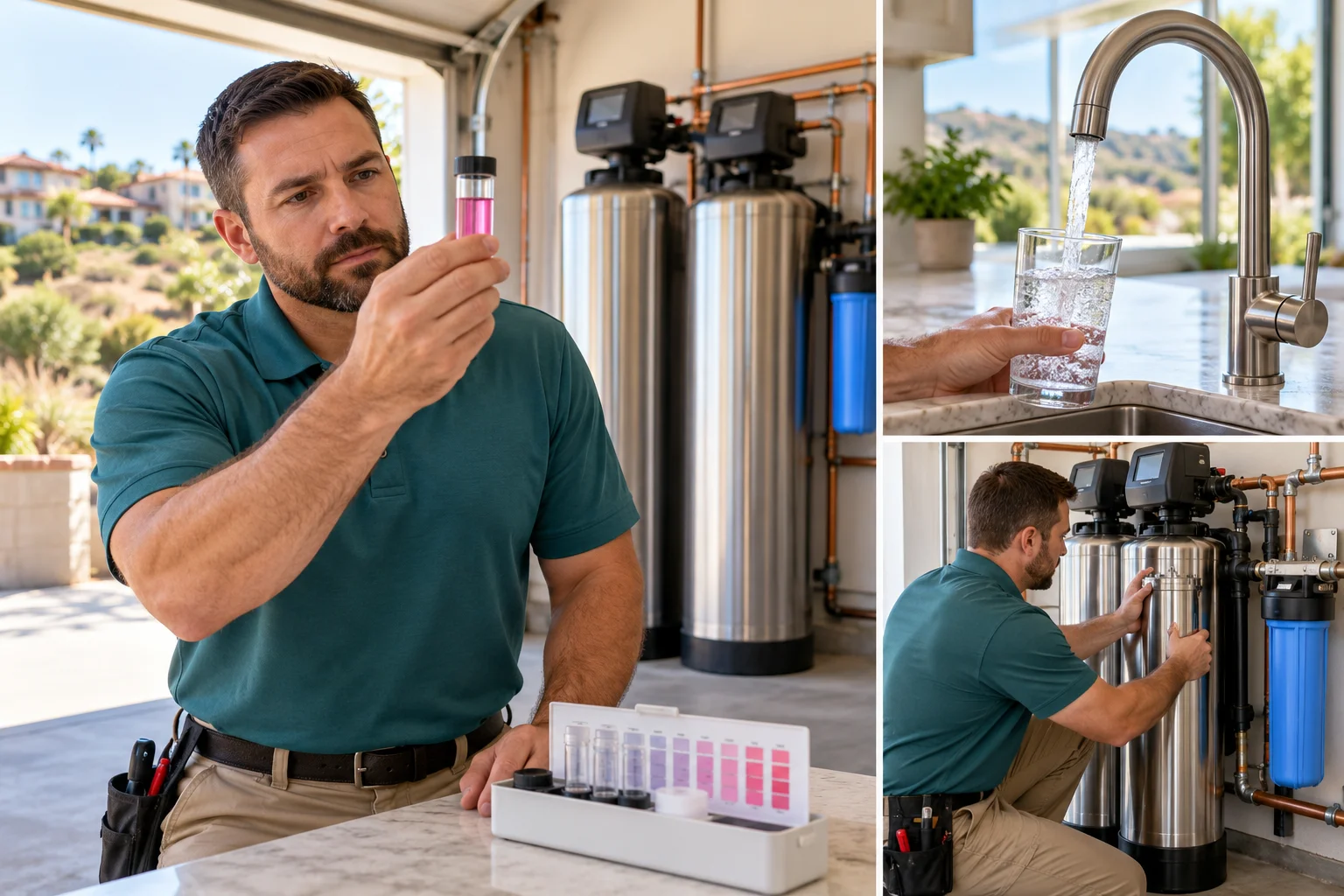
Start by reading the laboratory result correctly
Find the nitrate line on the full laboratory report. Note the result, unit, reporting form, sample date, and laboratory name. Don’t compare numbers unless the units and reporting forms match.
The current California nitrate limit couldn’t be confirmed from the approved source record for this page. That means we won’t publish a number that might be expressed in the wrong form. Ask the state-certified laboratory to identify the current California drinking-water standard and compare it directly with your result.
A private well also falls outside the federal rules governing public water systems. The well owner is responsible for testing and responding to problems. CDC guidance calls for annual private-well testing for nitrate, total coliform, total dissolved solids, and pH. It also recommends added testing after flooding, repairs, or changes in taste, color, or smell.
Nitrate usually can’t be diagnosed by looking at the water. A result also doesn’t identify its source. CDC lists several possible nitrate sources, including fertilizer, animal waste, septic systems, wastewater, storm runoff, flooded sewers, farm runoff, and decaying plants. Local geology can affect whether nitrate reaches a well.
Those are possible sources, not a diagnosis for De Luz. A laboratory result alone can’t prove that a septic system, nearby agriculture, or one storm caused the problem. Our San Diego well-water testing guide explains how to build a more useful testing plan.
Protect drinking water while you confirm the finding
If the laboratory says the water contains harmful chemicals, don’t drink it until you’ve received qualified guidance. CDC advises using another safe water source and contacting the health department or a well-water professional.
Boiling isn’t a nitrate treatment. CDC states that boiling can kill germs, but it doesn’t remove chemical contamination. Don’t treat a boil-water method as a substitute for nitrate-specific equipment.
Contact the laboratory first. Ask whether the result should be confirmed with another sample. Request the sampling instructions in writing. The laboratory can explain the correct bottle, tap preparation, storage, and delivery method for its analysis.
The current wording of San Diego County’s private-well guidance wasn’t confirmed in the approved record for this article. Contact the San Diego County Department of Environmental Health and Quality for current local direction. Ask which additional tests fit the property and whether the result calls for any reporting or well investigation.
A nitrate finding also shouldn’t replace broader testing. Coliform, pH, total dissolved solids, and other local concerns require their own analyses. One treatment type doesn’t protect against every possible well-water problem.
Questions about cancer or personal medical risk belong with a healthcare professional. The approved sources for this article don’t establish a cancer-risk interpretation for one laboratory result. Bring the full report, not just the nitrate line.
Compare nitrate treatment by its exact claim
Reverse osmosis, anion exchange, and distillation may appear in proposals for nitrate treatment. Don’t approve any option until the provider shows that the exact model carries an independently verified nitrate-reduction claim. A technology name alone isn’t proof that a particular unit treats your water.
The applicable NSF listing for nitrate reduction wasn’t confirmed in the approved record for this page. Ask the seller for the exact model number, certification directory entry, replacement element, and nitrate claim. Check the listing yourself before signing.
The treatment location matters too. A point-of-use device treats one selected tap. A point-of-entry system treats water entering the residence. Your choice should reflect where drinking, cooking, and other exposure occur. It should also account for the confirmed concentration and complete water chemistry.
If a provider proposes reverse osmosis drinking-water treatment, ask these questions:
- Is the quoted model certified for nitrate reduction?
- What feedwater conditions apply to that claim?
- Which tap or fixtures will receive treated water?
- What maintenance and replacement filters does the model require?
- How will performance be confirmed after installation?
- What happens if the well chemistry changes?
An RO system produces treated water and reject water. Water use and efficiency vary by model. Don’t accept a universal efficiency promise or reduction percentage that isn’t tied to the quoted unit.
Anion-exchange proposals need the same scrutiny. Ask how competing ions in the complete water analysis affect selection and operation. Get maintenance, regeneration, discharge, and testing requirements in writing.
Distillation also has limits. CDC notes that distillation doesn’t remove every substance, including some volatile organic compounds, volatile solvents, and certain pesticides. A countertop device shouldn’t be treated as proof that all well-water concerns are resolved.
Choose the installer after the system is defined
The installer should begin with the laboratory report, not a preferred product. A licensed pro can review the water chemistry, treatment location, plumbing layout, drainage needs, and exact equipment claim. The homeowner then contracts with and pays that provider directly.
Ask for a written scope naming every component and model. It should state which water concern each component addresses. It should also explain maintenance, replacement parts, wastewater handling, and post-installation testing.
Check the contractor’s license through the California Contractors State License Board. Confirm that the license is active and appropriate for the quoted installation. Don’t rely only on a logo, sales brochure, or verbal assurance.
Clear Water Pros SD is a referral service. We answer the phone, arrange the free in-home water test, and connect homeowners with separately licensed providers. We don’t install or own the treatment equipment.
Provider coverage for private wells in De Luz and Fallbrook wasn’t confirmed for this article. Confirm the property address and well-service scope when scheduling. Don’t assume that general San Diego County coverage includes every rural road or well configuration.
A free in-home test can help define visible and operational concerns. It isn’t automatically a state-certified laboratory analysis or a nitrate safety clearance. Ask what the test covers before relying on its findings. Laboratory nitrate results should remain the basis for selecting nitrate treatment.
Verify the water after installation
Installation isn’t the final proof. CDC advises testing again after treating contaminated well water and before resuming use. Ask a state-certified laboratory to collect or analyze the follow-up sample.
The result should show whether the installed system performs under that home’s actual conditions. Keep the original report, equipment documents, certification record, installation scope, and follow-up result together.
Follow the manufacturer’s maintenance schedule. Track filter changes, service visits, and later laboratory results. Don’t assume clear taste or odor proves nitrate reduction.
Continue the annual well tests recommended by CDC. Additional testing may be appropriate after flooding, repairs, household changes, or a noticeable water change. If later testing finds harmful contamination, use another safe water source while the well is evaluated.
When to call us
Call when a confirmed nitrate result needs treatment selection, installation planning, or follow-up testing by a licensed Water Filtration pro. We’ll connect you with a separate provider, and you’ll approve the provider’s written scope directly. Call us at (858) 400-4647 to set up a free in-home water test.