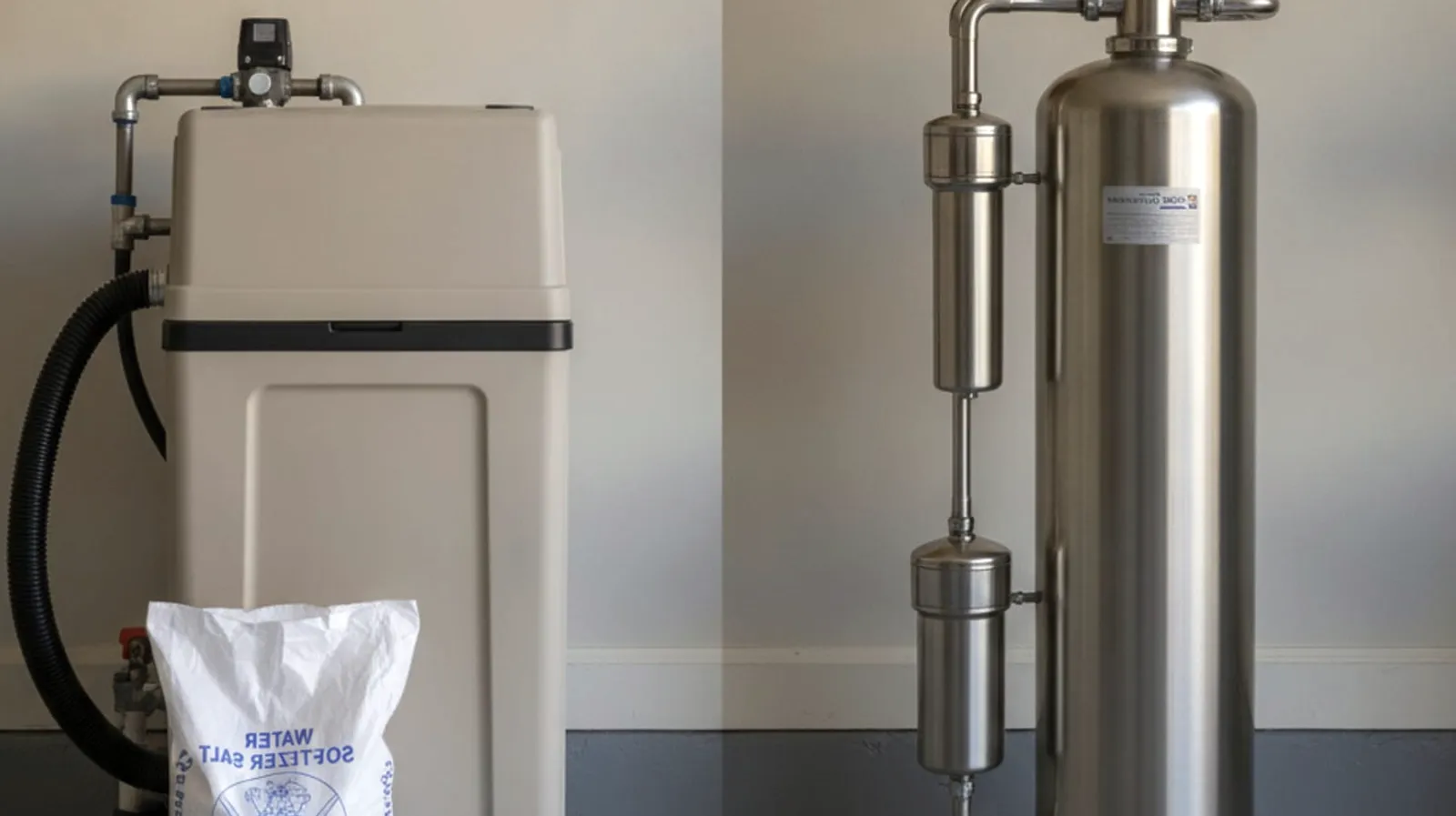
San Diego homes sit on some of the hardest municipal water in the country. That fact alone drives nearly every softener decision a homeowner makes. When you start shopping, one name keeps coming up in local conversations. Kinetico, and its twin-tank design, leads most of those conversations. The marketing pitch is simple and easy to repeat. Continuous soft water, no electricity, regeneration tied to real use. Some of that is genuinely useful in a hard-water region. Some of it is overkill for a smaller household. Here is a closer look at what twin-tank really does, what it costs, and when it pays off.
How a twin-tank softener actually works
A standard single-tank softener holds one resin tank. Once that resin fills with calcium and magnesium, it has to regenerate. That means flushing the hardness out and recharging with brine. During that cycle, the home gets a brief stretch of hard water through the pipes. The alternative is timing regeneration for overnight, when no one notices.
A twin-tank setup runs two resin tanks side by side. One softens your water while the other waits in reserve. The moment the working tank needs to regenerate, the valve switches over. Soft water then keeps flowing with no gap at all. The Kinetico design runs without electricity at all. It uses water pressure to drive the valve and triggers regeneration based on metered usage, not a clock.
The whole idea in plain language is simple. Soft water on tap, around the clock, with regeneration matched to actual demand.
Where the second tank really pays off
The strongest case for twin-tank shows up in homes with heavy, overlapping demand. Picture a family of five, with showers running back to back in the morning. A laundry cycle and the dishwasher are often going at the same time. A single-tank system can hit its regeneration point right in the middle of that morning rush. The result is a stretch of hard water through the heater and fixtures at the worst time.
Twin-tank removes that gap from your day entirely. You stop planning showers, dishes, and laundry around a hidden schedule. The soft water simply keeps coming whenever you need it.
The cost and space trade-off
Two tanks cost more than one, both in hardware and in installation labor. You also need floor space for the pair side by side. Many San Diego garages and utility closets are tight, especially on smaller coastal lots. Footprint can be a real constraint in those homes.
For a one- or two-person household with moderate use, that second tank spends most of its time idle. A well-sized single-tank metered softener regenerates overnight and usually covers the same daily use. The installed cost is lower than a twin-tank system. You can see what both configurations typically run in our water softener cost guide for San Diego.
San Diego’s hard water changes the math
Hardness in San Diego County climbs high, often sitting in the very hard range. That depends on the neighborhood and which treatment plant feeds your address. The water is harder than what many softeners elsewhere are sized to handle daily. The resin here cycles through more regenerations over its working life as a result.
For a large household in a high-hardness pocket with constant demand, the combination is punishing. Hard water plus heavy use is exactly where a single-tank regeneration window becomes most visible. Twin-tank’s continuous flow pays off in everyday comfort for those homes. For a smaller home in the same hard-water area, a properly sized single-tank metered unit still keeps up comfortably. It has more idle time between cycles, even with tough water.
Kinetico is not the only twin-tank brand
Kinetico built much of the early reputation for non-electric, demand-initiated twin-tank technology. That reputation is well earned over decades of installs. The twin-tank configuration itself, however, is not exclusive to one brand. Several manufacturers and local installers can specify a twin-tank system when the household profile calls for it. The technology matters more than the badge on the tank. Ask any installer whether twin-tank is something they offer. Then ask why they are or are not recommending it for your specific numbers. Once you know what your home needs, a local pro can be matched for you. They handle installation for both single- and twin-tank systems through our water softener installation service.
How to choose the right size
Resist the urge to decide by household headcount alone. The right call comes from three real measurements taken at your tap. You need your actual water hardness, your peak simultaneous demand, and your total daily usage. All three can be captured in a free in-home water test before any system is sized. That data tells you, and the pro reviewing it, whether twin-tank is a sensible upgrade. A single-tank unit may deliver the same daily experience for less, once those numbers are clear. For a fuller walkthrough of sizing math, see our guide on how to size a water softener.
Frequently asked questions
What does a twin-tank water softener do differently?
A twin-tank system carries two resin tanks and alternates between them. Soft water keeps flowing even while one tank regenerates. A single-tank system has only one tank. It either bypasses hard water briefly or regenerates on a timer, often overnight.
Are non-Kinetico twin-tank softeners available locally?
No, Kinetico is not the only brand making twin-tank softeners. Kinetico is the most recognized name in non-electric twin-tank softener design. Other manufacturers and local installers can spec the same configuration for the right home.
Can a twin-tank water softener run without electricity?
Many twin-tank softeners do not require electricity at all. Kinetico’s design uses water pressure to drive the control valve. Some other twin-tank models do use electric controls. Ask your installer which type you are actually getting before the work is scheduled.
Does a small home need twin-tank softening?
For a small household, the answer is usually no. A properly sized single-tank metered softener regenerating overnight handles one- to two-person homes well. It runs at a lower installed price and leaves no noticeable hard-water gap for most users.
What hardness level should I expect from San Diego tap water?
Hardness varies across the county, but much of it falls in the hard to very hard range. That level of hardness is a major factor in sizing any softener correctly here. It is also why regeneration cycles run more often in this region.
Talk with a local pro about your home
If your showers, dishes, and appliances still show hard-water scale, get a professional out. A separately licensed water-treatment pro can test your water and size the right system. Call (858) 400-4647 and Clear Water Pros SD will connect you with an independent local water-treatment professional.