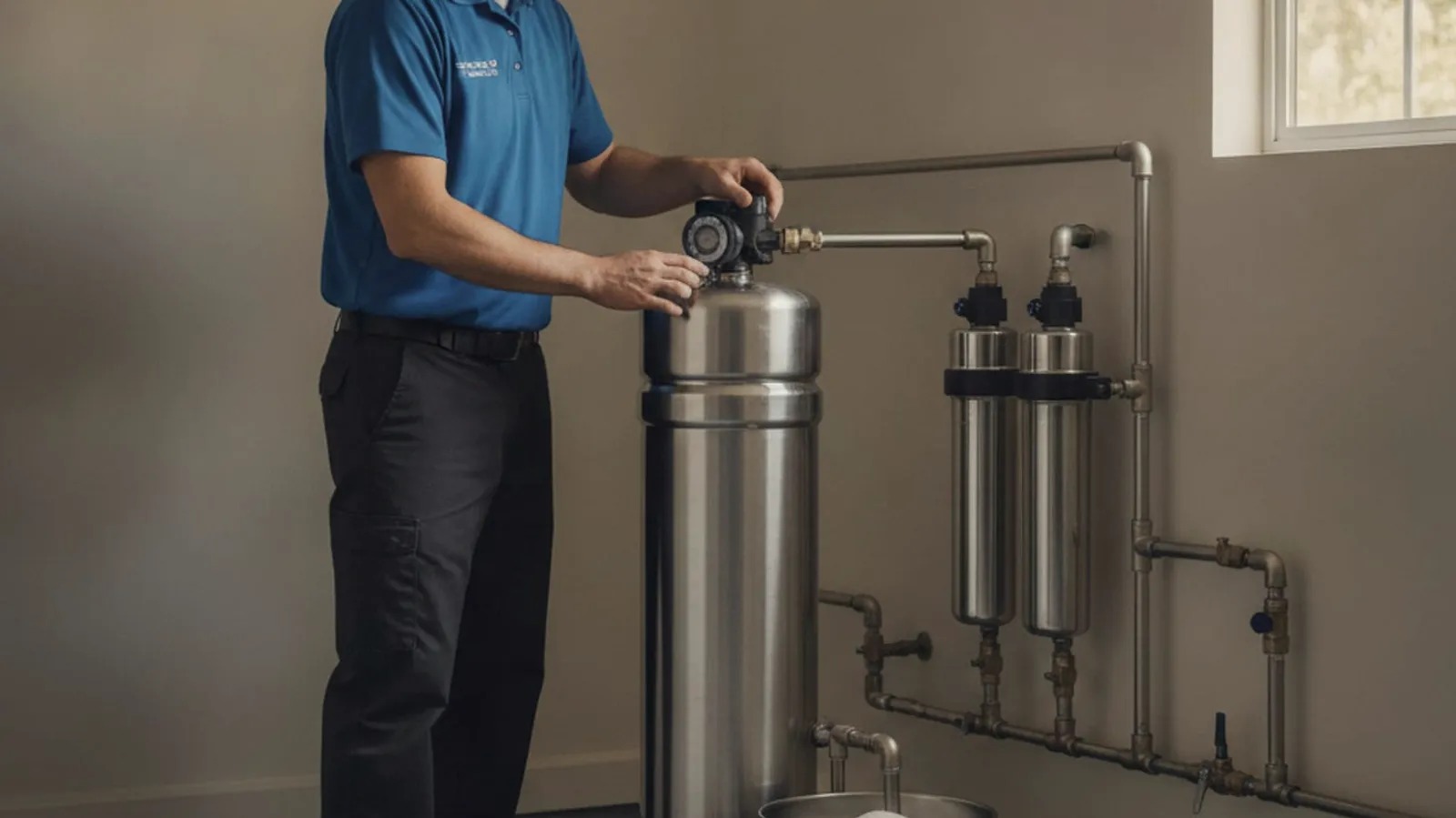
San Diego tap water carries significant mineral content. That hardness forces residential ion exchange units to work overtime. Resin beads degrade faster here than in cities with softer supplies. Skipping regular water softener maintenance is never a smart financial move. Neglect slowly destroys equipment that costs between $1,500 and $3,000 to replace. A yearly visit from a qualified technician keeps everything running correctly.
Clear Water Pros SD serves as a referral network across San Diego County, California. We connect homeowners with independent, separately licensed local water treatment professionals. Those specialists perform all actual work on your equipment. You can reach the network by calling (858) 400-4647 to find an available professional near you.
Recommended service frequency for local systems
Most households benefit from one professional visit every twelve months. Larger families using over 100 gallons daily should consider two visits per year. Older or smaller units also perform better with semiannual attention. The primary driver behind this schedule is the local water profile.
Our municipal supply arrives from the Colorado River and the State Water Project. Both sources introduce substantial dissolved minerals into the pipes. Furthermore, local utilities disinfect this water with chloramine instead of chlorine. Chloramine breaks down resin material much faster than traditional chlorine treatments do. Constant ion exchange drains bead capacity quickly under these specific chemical conditions. Annual inspections catch this wear before the unit stops producing treated water entirely.
Homeowners often struggle to remember when their next appointment falls. Setting up a recurring schedule removes that burden completely. You can also explore hard water solutions if your current setup struggles to keep up with demand.
Tasks performed during a professional visit
A thorough inspection goes far beyond simply pouring more salt into the brine tank. Independent technicians follow a detailed checklist to evaluate every component.
Brine tank cleaning and evaluation
The brine tank holds the sodium needed to recharge exhausted resin beads. Sediment and impurities naturally accumulate along the bottom over time. A professional drains the vessel and scrubs away those deposits. They also check for compacted salt masses that refuse to dissolve properly. Inspecting the safety float and the brine draw valve happens during this same step.
Identifying hardened salt crusts
Sometimes a solid crust forms halfway down the tank interior. This leaves a hollow air pocket underneath while the top appears full. Water cannot reach the salt above that gap. Regeneration cycles fail silently when this happens. Spotting and breaking these crusts early prevents weeks of untreated water flowing through your plumbing. Read our guide on water softener salt bridge issues for more details on this common problem.
Control valve assessment
The control head manages backwash timing, brine draws, and rinse cycles. Technicians verify that each stage operates according to factory specifications. They test both timer based and demand initiated settings. Worn seals and degraded O rings get replaced before they cause internal leaks. A malfunctioning valve wastes enormous amounts of salt and water. Eventually it will fail completely without periodic attention.
Resin bead testing
Ion exchange media generally lasts between 10 and 15 years under ideal conditions. Continuous chloramine exposure shortens that lifespan significantly in our region. Professionals measure the remaining exchange capacity using specialized testing equipment. Fouled or exhausted beads cannot be cleaned back to original factory standards. Complete replacement becomes necessary once capacity drops below acceptable thresholds.
Confirming hardness programming
Your control head must match the exact mineral concentration entering your home. Local hardness levels shift slightly depending on neighborhood location and seasonal blending ratios. Incorrect programming either wastes expensive salt or allows minerals to slip past the resin. Verifying these numbers ensures efficient operation throughout the year. Using a water hardness calculator helps you understand your baseline readings.
Checking for moisture and leaks
Fittings, bypass assemblies, and threaded connections all require visual inspection. Small drips cost very little to address when caught early. Ignored leaks eventually damage cabinetry, drywall, and concrete floors. Finding moisture during a scheduled visit prevents catastrophic property damage later. If you suspect a leak right now, review our article about water softener leaking for immediate troubleshooting steps.
A complete professional visit typically requires about one hour to finish.
Warning signs your equipment needs attention
Untreated water returning to your faucets is the most obvious indicator. Soap fails to lather properly when minerals are present again. Dishwashers leave white spots on glasses and plates. Shower doors develop stubborn cloudy films that resist normal cleaning. These symptoms mean the unit has stopped functioning correctly.
Several other clues point toward mechanical trouble. Salt levels that never decrease indicate a failed regeneration cycle. Blocked valves or hardened crusts usually cause this specific issue. Conversely, salt disappearing too rapidly suggests the control head is cycling excessively. High hardness settings or incorrect timers drive this wasteful behavior.
Puddles forming around the base of the tank signal a physical leak. Never delay addressing visible moisture near electrical components or plumbing connections. Foul odors resembling sulfur might mean bacteria have colonized a dirty brine tank. Professional cleaning resolves this biological growth before it spreads further.
Listen for unusual operating times as well. Regeneration should occur during early morning hours when nobody uses water. Midday cycling noises mean the control valve requires recalibration or repair. Homeowners living near the coast can look into water softener installation in Oceanside to find regional support options.
Typical expenses for upkeep in San Diego County
Annual inspections generally fall between $100 and $250 for most standard residential setups. The final amount depends on system age, complexity, and total time spent onsite. Older units with proprietary parts sometimes push toward the higher end of that range.
Replacing exhausted resin beads costs several hundred dollars including materials and labor. This procedure requires draining the mineral vessel and refilling it carefully. It does not happen frequently, but performance plummets when beads finally fail.
Control valve repairs vary widely depending on manufacturer specifications. Simple O ring swaps remain relatively inexpensive. Complete valve head replacements represent a much larger financial investment.
If your current equipment is beyond saving, a fresh water softener installation might make more sense. Accurate sizing requires knowing your household flow rates and mineral concentrations. Scheduling a free in home water test provides the exact data needed for proper equipment selection. Always research thoroughly before signing any contracts. Our guide explaining how to choose a water softener company in San Diego offers helpful purchasing advice.
What homeowners can handle alone
Basic upkeep tasks do not always require outside help. Pouring new bags of salt into the brine tank is simple enough for anyone. Visually checking for hardened crusts takes only a few seconds. Monitoring how your water feels during showers also helps track overall performance.
Deeper mechanical evaluations belong with trained specialists. Measuring resin capacity demands laboratory grade testing instruments. Disassembling a control valve requires understanding complex hydraulic sequences. Draining a brine vessel safely means avoiding damage to internal floats and draw tubes. Reassembling everything incorrectly introduces new problems.
The true danger of amateur repairs lies in missed defects. Undetected issues compound quietly over many months. Six months of unnoticed hard water generates heavy scale inside pipes and heaters. Professional visits remain affordable precisely because they follow predictable routines. Emergency breakdowns always cost significantly more than scheduled preventative care. If you want to avoid salt entirely, exploring salt free water conditioning presents an interesting alternative path.
Consequences of ignoring regular service
Neglected equipment eventually stops removing dissolved minerals altogether. By the time residents notice harder water, internal damage has already occurred. Scale accumulation acts as thermal insulation inside water heaters. Heating elements must work much harder to warm the same volume of liquid. Energy bills rise steadily while the appliance lifespan shrinks dramatically.
Mineral deposits also narrow the internal diameter of copper and plastic pipes. Reduced interior space restricts flow and lowers pressure at every fixture. Connected appliances like washing machines and ice makers suffer identical degradation. Repairing or replacing ruined household machinery adds unexpected expenses quickly.
The control valve remains especially vulnerable to prolonged neglect. Improper cycling wears out internal seals unevenly over time. Components designed to last a decade might fail within just a few years. An inexpensive seal replacement transforms into a costly full assembly swap. Chloramine damage to resin beads progresses invisibly day after day. Water quality degrades gradually until the media reaches a point of no return. Routine inspections prevent all of these cascading failures efficiently.
For broader treatment strategies, learning about whole house water filtration helps protect plumbing beyond just hardness removal. Residents in North County can also investigate water softener installation near Encinitas for localized guidance.
Frequently asked questions
How often should local equipment receive professional attention?
One visit per year suits most average households in this region. Families consuming over 100 gallons daily need semiannual appointments. The combination of high mineral loads and chloramine disinfection accelerates resin wear considerably. Sticking to a consistent schedule preserves long term functionality.
Which components get checked during a standard visit?
Technicians examine the brine vessel, control head, resin bed, and all plumbing connections. They clean out accumulated sediment and verify programming accuracy. Leak detection and salt crust inspections round out the typical checklist. Most thorough evaluations wrap up within approximately sixty minutes.
What symptoms suggest my unit has stopped working?
Watch for soap that refuses to lather or cloudy residue on glassware. Salt levels staying perfectly static also indicate a mechanical failure. Moisture pooling around the base or strange midday cycling noises warrant immediate investigation. Reviewing information about water softener repair explains how specialists address these specific malfunctions.
Is do it yourself upkeep a realistic option?
Adding fresh salt and visually inspecting the tank are appropriate homeowner tasks. Evaluating resin health or rebuilding control valves requires specialized training. Missing a hidden defect during an amateur inspection risks severe downstream plumbing damage. Scheduled professional care remains the safest approach overall.
Do salt free alternatives require less upkeep?
Conditioning systems lack resin beds, brine vessels, and motorized control heads. This design eliminates nearly all routine servicing requirements. However, they alter mineral structure rather than removing calcium and magnesium ions. Many local residents find them practical despite this fundamental operational difference.
Arranging expert support for your home
Equipment making strange noises or producing untreated water needs prompt evaluation. A separately licensed professional should inspect any system showing visible leaks or sudden performance drops. Delaying these assessments often turns minor adjustments into major replacement projects. Call (858) 400-4647 and Clear Water Pros SD will connect you with an independent local water-treatment professional.