The glass on a 92129 kitchen sill is City of San Diego water, even when the lot looks over Los Peñasquitos Canyon. Tract homes off I-15 in Rancho Peñasquitos are not Mira Mesa, and they are not a private-well community by default. Filtration here starts with that City supply, then a choice between the drinking tap and the whole house.
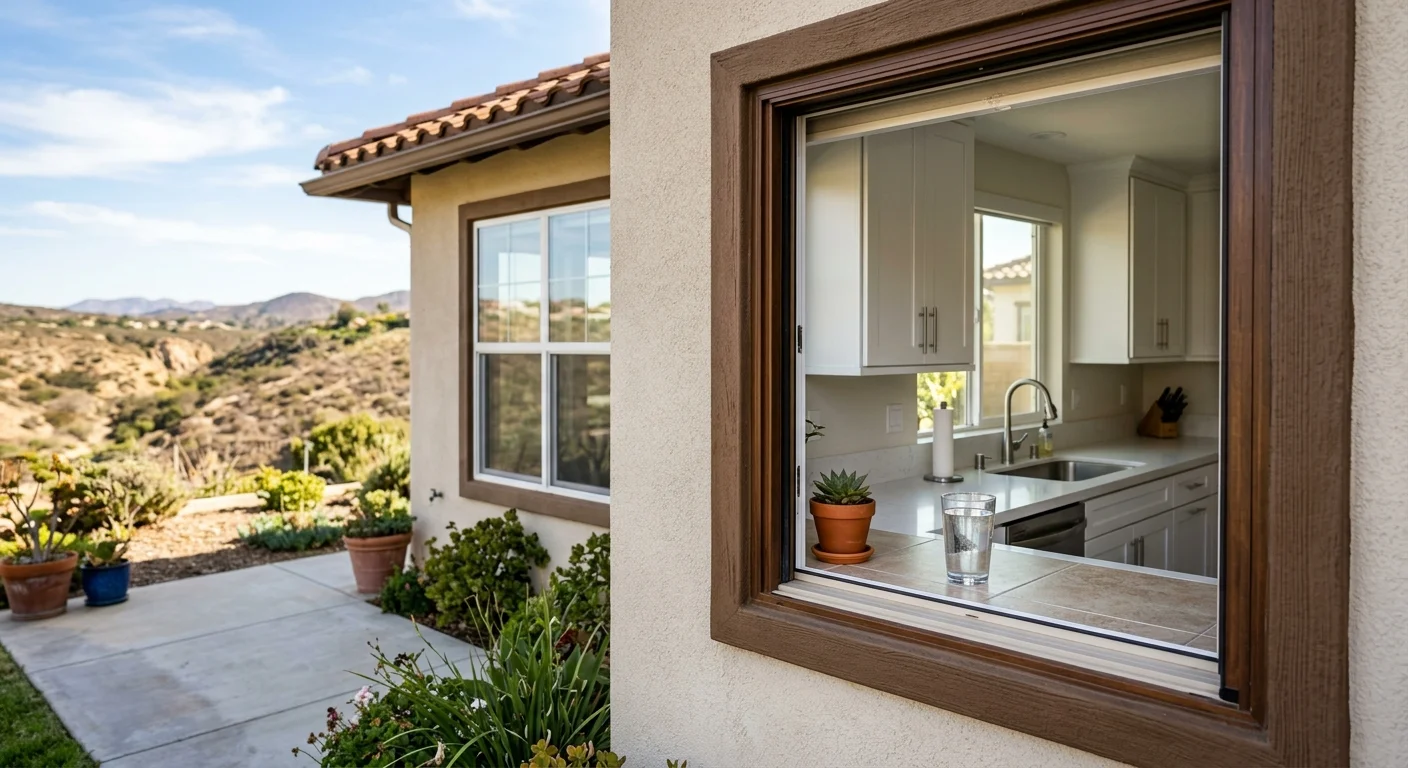
Where Rancho Peñasquitos tap water comes from
Rancho Peñasquitos, Rancho Peñasquitos Canyon, and the 92129 tracts sit inside the City of San Diego. The serving utility is City of San Diego Public Utilities. It is not Helix Water District, and it is not the City of Poway across I-15. Confirm the retailer on the water bill for the exact address. This page does not establish how many canyon lots use wells. If the bill names a different agency, stop and use that agency’s report.
Most of what fills those pipes is imported. The San Diego County Water Authority buys Colorado River water and State Water Project water for member agencies, including the City. Helix Water District publishes a useful note about that imported supply: water at 10 or more grains per gallon is considered hard, and imported water from the Colorado River and State Water Project averages 14 grains of hardness. That is a statement about the imported supply the county buys. It is not a tap reading for Park Village, Black Mountain, or Canyonside.
The City’s own hardness numbers split across two publications. On its home-plumbing page, the City of San Diego says drinking water typically averages about 16 grains per gallon, or 276 ppm, and can range from 16 to 18 gr/gal, or 272 to 284 ppm, depending on water demand and the area of the City. That figure is for the City system only. It is not countywide, and it does not describe private wells.
The City’s 2025 Consumer Confidence Report, Public Water System 3710020, reports total hardness by treatment plant, not by neighborhood. Alvarado averaged 13.8 gr/Gal (11.9–15.8). Miramar averaged 14.1 (11.7–16.6). Otay averaged 14.2 (11.7–15.8). Purchased treated water averaged 8.5 (3.18–13.6). Those plant rows are not a 92129 kitchen result. They are also a different City publication covering a different set of measurements than the 16 gpg typical figure. Use both with that qualifier.
Blends change with demand. A house above the canyon in August can sit on a different mix than the same house in February. Open the current report for the year you care about. Do not copy an East County district number, a well-water page, or a Mira Mesa writeup onto this tract.
For the broader safety picture, read whether San Diego tap water is considered safe against the City report, not against a forum thread.
Taste, hardness, and chloramine at the kitchen tap
Taste at the kitchen tap is usually disinfectant, minerals, or both. The City of San Diego names the disinfectant, the residual, and the disinfection byproducts in its water-quality report. Do not assume chloramine or chlorine for every 92129 billing cycle. CDC notes that chlorine taste and smell can differ from untreated water and from chloramine, and that the report is how you identify which disinfectant is in use.
If the complaint is pool smell in a glass, treat that as an aesthetic issue first. NSF/ANSI 42 covers certified aesthetic reduction claims, including chlorine taste and odor when the exact model lists that claim. NSF/ANSI 53 covers specified health-effect contaminant claims. A standard is not a ranking. It does not mean every filter reduces every contaminant. Read the model’s certified reduction claim before you buy.
Hardness is the other half of the glass. USGS classifies hardness as calcium carbonate: 0–60 mg/L soft, 61–120 moderately hard, 121–180 hard, over 180 very hard. Its calculator uses about 17.1 mg/L per grain per gallon. City of San Diego’s typical 16 gpg figure sits in very-hard territory on that scale. That is classification guidance. It is not a medical finding, and it is not a forecast of appliance life or annual cost. Spots on a Black Mountain glass shower door, white crust on a kettle, and soap that will not rinse are the household version of those grains.
Fluoride is separate from hardness. The City’s November 2024 water-quality FAQ describes adjustment to 0.7 ppm. That is a City target, not a countywide tap concentration and not a legal-limit statement. Other supplies and blends differ. Does San Diego water have fluoride walks through that target and what an RO claim can and cannot say. CDC says RO may reduce fluoride. NSF/ANSI 58 treats fluoride reduction as an optional exact-model claim. There is no blanket removal percentage.
Hexavalent chromium shows up in the same 2025 City report. California’s MCL is 10 ppb. Alvarado, Miramar, and Otay listed ND. Purchased treated water averaged 0.1 ppb, range ND–0.4. Those rows sit below the 10 ppb MCL. They are still not your kitchen tap unless you test that tap.
No pitcher, fridge filter, or under-sink cartridge removes every contaminant. EPA’s home-treatment guidance is blunt on that point. Match the device to the concern the report and a test actually show.
Under-sink vs whole-house options for this neighborhood
A 92129 tract kitchen is the usual place people start. Under-sink drinking water filtration treats one tap. That is point-of-use: cooking and drinking at the sink you actually use. It does not change the shower, the laundry, or the hose bib on the canyon side of the lot.
Reverse osmosis drinking water is the tighter drinking-water option when the certified claim on the exact model matches the concern. NSF/ANSI 58 covers RO systems. An RO unit produces treated water and reject water. Performance and efficiency are model-specific. EPA’s WaterSense consumer page states labeled units demonstrate at most 2.3 gallons of reject water per gallon treated under its criteria. That is a label criterion, not field performance for every install. EPA also gives national examples of five or more reject gallons per treated gallon, and up to ten for some inefficient units. Those are national examples, not a Rancho Peñasquitos measurement.
Whole-house, or point-of-entry, treats water as it enters the residence. That is the path when the problem is scale on fixtures, spots on glass, or laundry feel, not only the drinking glass. Whole-house water filtration and a softener are different tools. NSF/ANSI 44 covers ion-exchange softeners that reduce calcium and magnesium hardness. Salt-free conditioning does not remove hardness ions. Evaluate the exact scale-reduction claim, not a promise of softened water. EPA advises sizing a softener from measured hardness and household water use, and excluding irrigation demand when that water should stay hard. Oversizing can waste water. Demand-initiated regeneration responds to use and hardness rather than a fixed timer.
Ion-exchange softening adds sodium. University of Nebraska–Lincoln Extension estimates about 8 mg/L of sodium for each grain per gallon of hardness removed. People on restricted sodium diets should talk with a physician. Drinking and cooking water is often taken from a kitchen cold line that bypasses the softener. That split is why many 92129 homes pair a whole-house unit with a separate under-sink drinking tap.
City of San Diego Development Services lists water-softener installation among qualifying Simple No-Plan Plumbing/Gas Permit work for eligible properties. Scope and historic-property rules change the permit route. That is City jurisdiction guidance, not a countywide rule, and it is not evidence of a softener ban. A licensed pro pulls the permit for the address. Clear Water Pros SD does not.
EPA’s November 2024 Guide to Selecting Water Treatment Systems describes basic pitchers and tap filters as typically under $100, RO and distillation systems as tending to cost a few hundred dollars and possibly requiring professional installation, and point-of-entry systems as costing thousands and generally requiring professional installation. Those are attributed broad categories from that guide. They are not a San Diego installed estimate and not a Clear Water Pros quote. Maintenance, replacement filters, and install scope belong in a written provider quote.
For a canyon lot with a large irrigated slope, do not size a softener off the irrigation meter. For a Park Village kitchen that only needs a better drinking tap, under-sink is the narrower job.
What an in-home test still adds
The City report is a system average. It is not the copper line under a 1980s 92129 sink. An in-home test is how you stop guessing which tap is the problem.
Clear Water Pros SD arranges a free in-home water test and connects you with a licensed water filtration pro. You contract with that pro directly, and you pay that pro directly. Ask what the visit actually measures. Do not treat a TDS pen as a safety clearance. EPA’s secondary TDS guideline is 500 mg/L for aesthetic and technical concerns. It is not a drinking-safety cutoff, and it does not prove contaminants are absent.
If the property is on a private well, CDC recommends annual testing for total coliform, nitrate, TDS, and pH through a state-certified laboratory, plus local health-department guidance on extra tests. Boiling does not remove chemical contamination. Harmful or suspected contamination calls for another safe water source and health-department guidance. Most Rancho Peñasquitos addresses on City mains still benefit from a point-of-use check, because household plumbing, a fridge filter, and an aging cartridge change what you drink.
Bring the current City Consumer Confidence Report to that visit. Identify the concern first: taste, hardness, a listed contaminant, or scale. Then match point-of-use or point-of-entry, and the exact NSF/ANSI claim, to that concern. Include manufacturer maintenance and replacement-filter cost when you compare ownership. A certified claim is for the listed reduction, not for every substance in the pipe.
Confirm a contractor’s license on the CSLB license check before anyone opens a cabinet.
City of San Diego pages to verify
Start with the City’s water quality portal. It points you to the current report and notices for City of San Diego customers. That page does not certify every county tap, private well, building, or emergency condition as safe.
Open the 2025 Consumer Confidence Report, or the newer year if the City has posted it, and read the plant tables for hardness, sodium, disinfectant, and any contaminant you actually care about. Sodium and hardness have no MCLs in that report. Sodium is generally naturally occurring. In 2025, Alvarado sodium averaged 87.8 ppm (73.1–102). Miramar averaged 86.2 (76.6–98.4). Otay averaged 111 (92.5–136). Purchased treated water averaged 71.2 (47.8–87.0). Those are plant rows, not a kitchen result.
For the typical 16 gpg hardness language, use the City’s home plumbing water page. Keep the area and demand qualifier. Do not paste that number onto Helix cities or a well.
If a softener is on the table, read the City’s plumbing permit page for Simple No-Plan eligibility. Filtration-only jobs can follow a different path. Confirm with Development Services for the address. Do not assume a historic canyon property uses the same route as a standard tract home.
California drinking-water limits sit with EPA under the Safe Drinking Water Act and with the State Water Board Division of Drinking Water. The City report is how those limits show up at this metro’s plants. Your 92129 tap is one more step downstream.
When to call us
Call when the City report and the kitchen tap still do not match, or when you want a licensed pro to size under-sink filtration, RO, or whole-house treatment for a 92129 home. Clear Water Pros SD sets up the test and connects you. You hire the pro directly. Call us at (858) 400-4647 to set up a free in-home water test.