Boiling liquid and capturing the resulting steam is a classic separation technique. Many homeowners wonder how to distill water for daily use. The process turns liquid into vapor, then cools it back down in a clean vessel. This leaves many dissolved solids behind in the original container. However, the method does not guarantee perfectly pure output every time.
Setting up a simple stovetop experiment
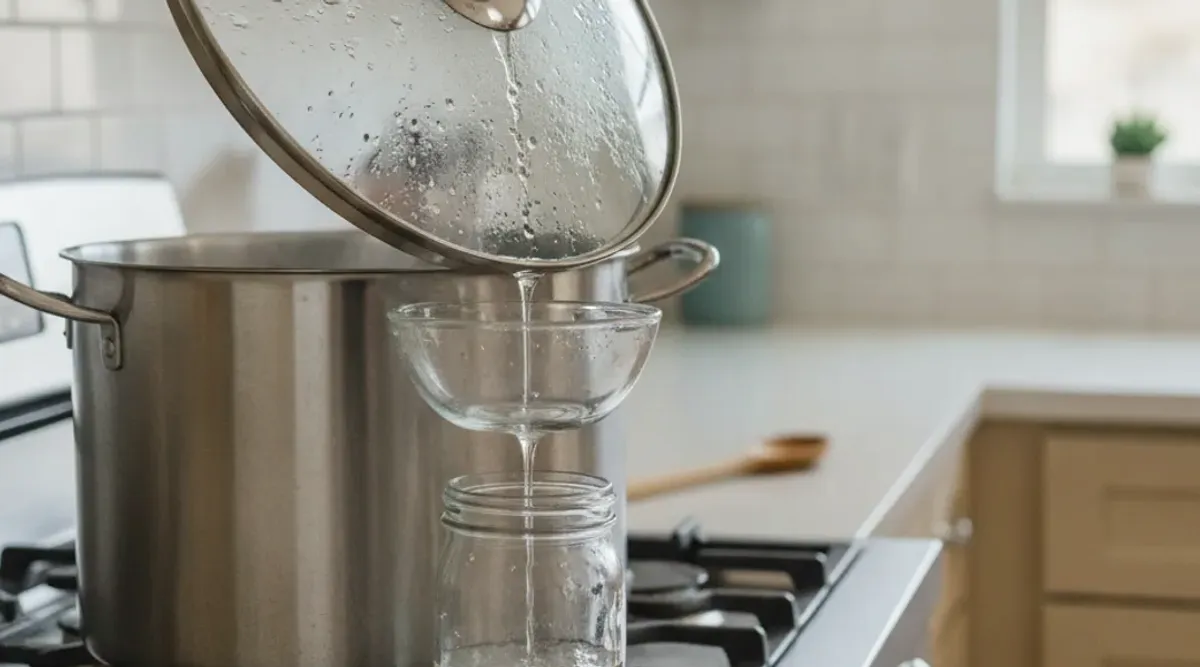
A Science Buddies distillation demonstration shows the basic physics of this process. You need a deep cooking pot and a heat-resistant ceramic bowl. Place the bowl inside the pot so it sits above the waterline. Pour your source liquid around the bowl without letting any splash inside. An inverted lid placed on top creates a sloped surface for condensation. Adding ice cubes to the lid helps cool the rising steam faster. As the vapor rises, it hits the cold metal and turns back into liquid droplets. Those droplets slide down the slope and fall into the collection bowl.
Always apply gentle heat to prevent violent bubbling. A rolling boil might push untreated liquid over the rim of the bowl. Use oven mitts whenever you handle hot components. Turn off the burner and let everything reach room temperature before disassembly. Store your finished product in a sanitized, sealed container. Remember that this setup illustrates scientific separation rather than certifying drinking safety.
Keep the kitchen well ventilated while the stove is running. Never walk away from an active heating element. Stop the process well before the outer pot runs completely dry. Only use cookware rated for high temperatures and direct food contact.
If your local authority issues a do-not-use advisory, follow their exact instructions. Do not rely on a kitchen experiment during a suspected chemical emergency.
Understanding what this process actually removes
Phase changes leave heavy minerals and most salts in the boiling chamber. That does not mean the collected steam is entirely free of hazards. Some volatile organic compounds travel upward alongside the water molecules. Certain pesticides and volatile solvents can also survive the boiling process. The CDC’s guide to home water treatment systems specifically notes these limitations regarding distillation. Bacteria may also multiply on cooling coils when the machine sits idle.
Different treatment methods target different problems. A laboratory analysis reveals exactly which contaminants are present in your supply. You should match your chosen system to those specific test results. Calling water “distilled” does not automatically mean it meets health standards.
Common mistakes with homemade setups
Splashing is the most frequent cause of cross-contamination. If raw liquid jumps into the collection bowl, you must discard the entire batch. Unstable lids or wobbly bowls create serious burn risks near the stove. Using non-food-grade materials might introduce unwanted chemicals into your steam. Leftover residue in the collection vessel can easily spoil a fresh batch.
Leaving a pot unattended invites fire hazards if the liquid evaporates completely. Always wash and thoroughly dry all components between uses according to manufacturer guidelines. A stovetop rig lacks sensors to verify the chemical makeup of the output.
Why this method struggles to supply a whole house
Producing enough liquid for daily showers and laundry takes immense effort. Each batch requires constant supervision, significant energy, and lengthy cooling periods. Output volume depends heavily on pot size, heat intensity, and lid temperature. Promising a specific gallons-per-hour rate would be highly misleading.
Countertop electric units automate some steps but still have limited capacities. Their maintenance routines and contaminant reduction claims vary widely by model. Always read the performance documentation instead of assuming universal purification.
For broader household needs, exploring professional options makes more sense. A whole-house filtration system treats water entering multiple fixtures simultaneously. An under-sink water filtration unit targets a single kitchen tap for drinking purposes. A reverse osmosis drinking water setup offers another point-of-use alternative. These systems serve different functions and carry distinct documented claims. Start by reviewing your utility report or scheduling a free in-home water test. Hard data guides better decisions than taste alone.
Special uses like medical devices and fish tanks
Always check the manual for your specific appliance before adding homemade liquids. Medical equipment like CPAP machines requires strict adherence to manufacturer specifications. Your treating clinician should provide guidance for any health-related device. Steam irons, humidifiers, and car batteries also have unique requirements.
Aquarium inhabitants depend on precise mineral balances to survive. Water stripped of all dissolved solids often needs careful remineralization. Consult species-specific husbandry guides rather than assuming stovetop batches work safely.
Frequently asked questions
Does stovetop distillation match commercial purity?
You cannot guarantee identical results without laboratory verification. Source chemistry, splashing, and storage conditions all alter the final composition. Only professional testing confirms the exact contents of your batch.
Is homemade distilled liquid safe for daily consumption?
No general guide can confirm safety for an unknown source. Check current utility advisories and maintain spotless equipment. Seek qualified medical advice before changing your primary drinking supply.
How long does producing one gallon typically take?
There is no universal timeline for this kitchen process. Yield fluctuates based on heat levels, pot dimensions, and cooling efficiency. The setup demands continuous monitoring until you turn off the burner.
How does boiling compare to point-of-entry filters?
Boiling relies on phase changes in small, supervised batches. Point-of-entry equipment treats flowing supply lines continuously for entire homes. Performance depends entirely on the specific design and verified reduction claims.
Getting expert help for your water
Stovetop experiments teach basic science but rarely solve ongoing household quality issues. If you need reliable treatment for drinking or appliances, a separately licensed professional should evaluate your situation. They can recommend verified equipment suited to your specific test results.
Call (858) 400-4647 and Clear Water Pros SD will connect you with an independent local water-treatment professional.