Chlorine vs chloramine in your water
Water utilities may use either chlorine or chloramine to disinfect the supply, and each one can change how the water tastes and smells. Since practices vary by provider and can shift over time, find the disinfectant listed in the latest water-quality report or call the utility that serves your address before choosing treatment.
What you'll learn
- Steps to confirm which disinfectant your utility is using right now
- Why flavor and odor alone can't tell you which disinfectant is in the water
- Why a "carbon" label alone doesn't show reduction performance
- How to weigh one specific model's certified claim for chloramine or chlorine
- When to call the water provider about an update or alert
Step by step
- Pull up the current water-quality report from the utility that serves your address and look over its disinfectant section.
- If the report leaves you unsure or you notice an unexpected change, scan current notices or call the utility.
- Taste, smell, or a generic strip reading alone can't tell you whether it's chlorine or chloramine.
- Decide first whether you want better taste and odor or a specific reduction claim.
- Review the exact model's independent certification along with its rated flow, capacity, and replacement conditions for the confirmed disinfectant.
- If you check performance after the unit is in place, follow the manufacturer's sampling and maintenance instructions.
Start with the utility's report or a direct call to confirm the disinfectant. A filter labeled only as "carbon" tells you nothing about chloramine or chlorine reduction. Compare the exact model's certified claim against its listed flow, capacity, and replacement conditions.
Rather have a pro handle it?
Reach out to a separately licensed water-treatment pro in San Diego County. Inquire about the free in-home water test.
Keep learning.
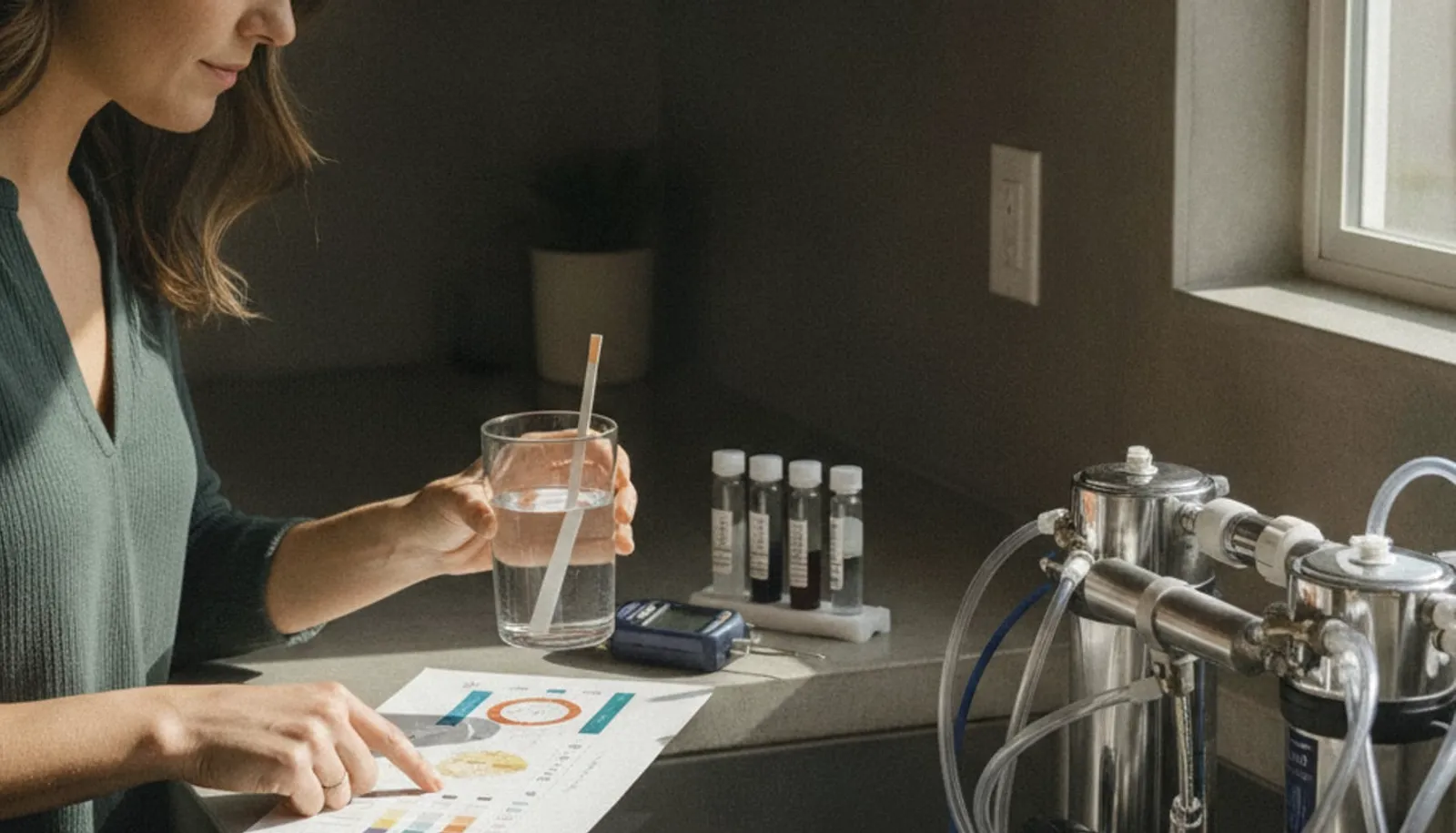
How to test your tap water at home
According to the City of San Diego, tap water in its distribution system typically measures around 16 grains per gallon, though the figure shifts by neighborhood and seasonal demand. A store-bought test strip can give a fast screening reading for whatever parameters that particular kit covers, yet it cannot stand in for a proper lab analysis or confirm that water is safe to drink.
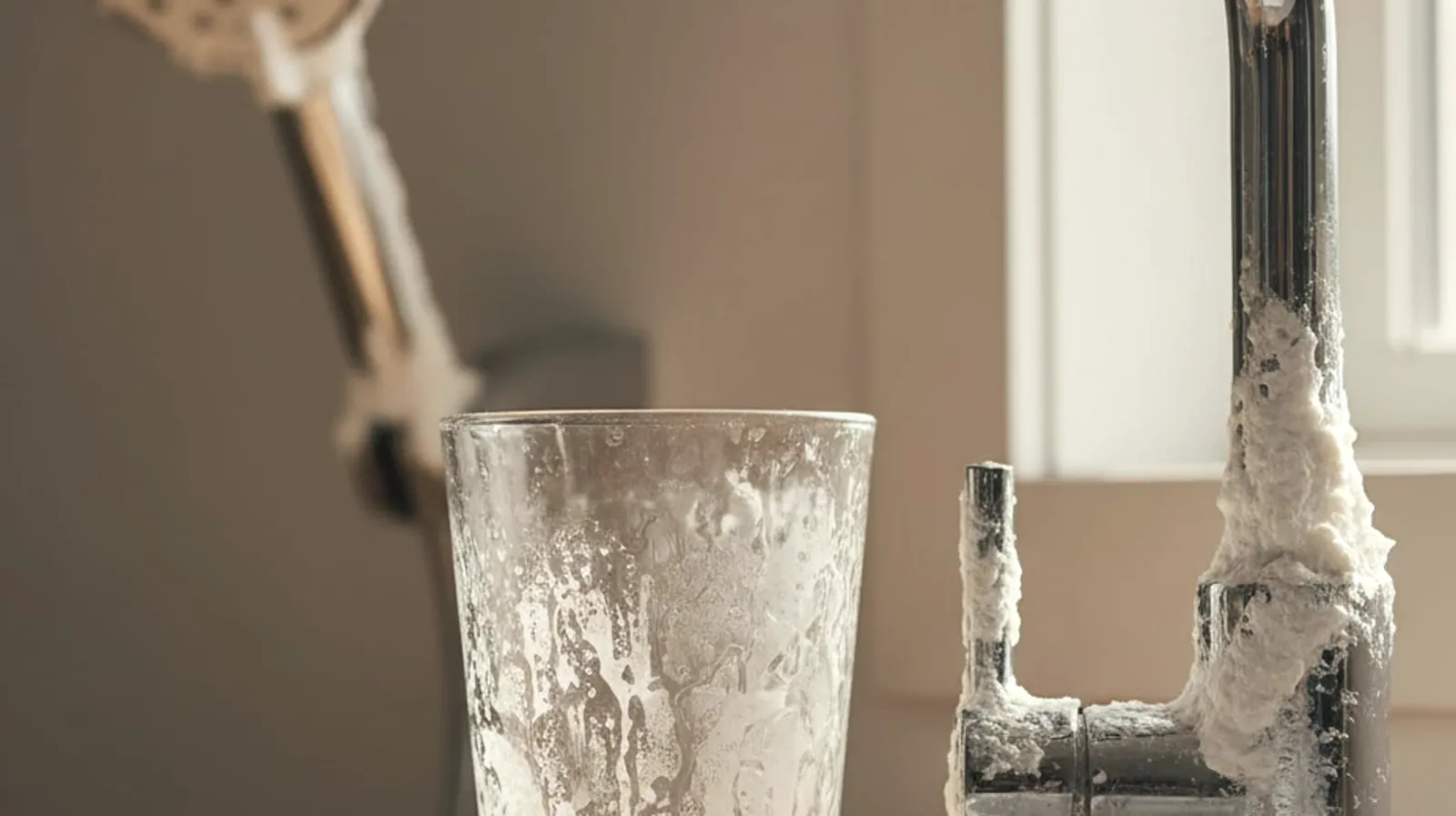
How to spot hard water in your home
Hard water minerals rarely announce themselves through scent or sight. Instead, look for scale, spots, or shifts in how soap foams. Other issues can mimic these clues, so run a proper hardness test before settling on any treatment option.
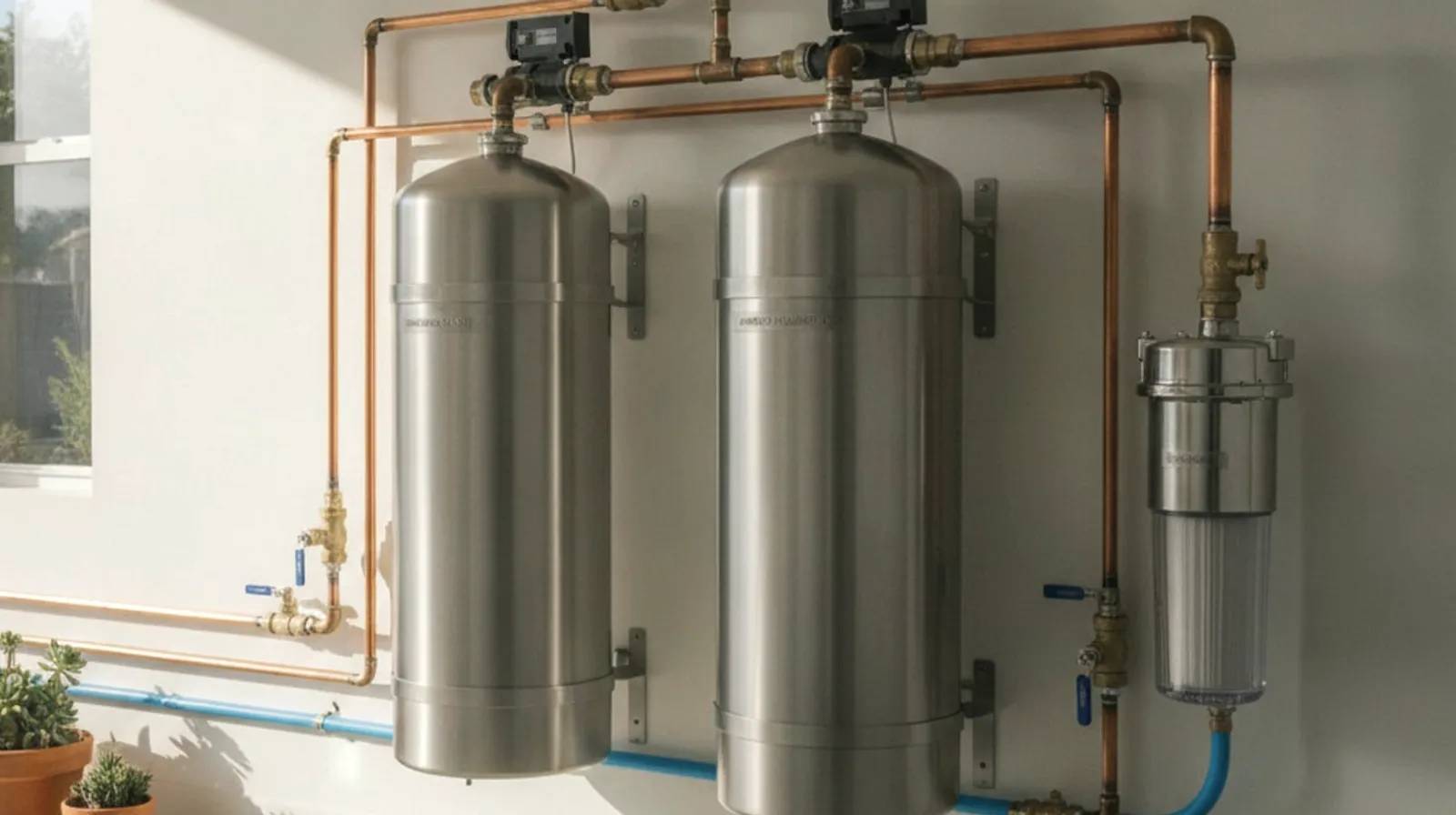
How a whole-house water filtration system works
A point-of-entry water-treatment setup sits on the line that feeds the home, so every fixture past it gets treated water. What gets removed depends on the specific gear, filter media, water flow, and what the unit is certified to reduce. Knowing this scope makes it easier to weigh a whole-house setup against a point-of-use unit attached to a single tap.