An older North Park address can raise fair questions about its plumbing. The build year alone can’t tell you whether lead is reaching the kitchen tap. Check the available records, then use a qualified laboratory for an address-specific answer.
Could an older North Park home have lead at the tap?
It’s possible for an older home to need closer investigation. Still, age doesn’t prove that a service line, fixture, solder joint, or tap contains lead. It also doesn’t establish what’s present in the water today.
North Park includes homes that have passed through many owners and renovations. A newer kitchen faucet doesn’t document everything behind the wall. Likewise, an older-looking pipe isn’t a water test. Remodeling records, plumbing invoices, and utility information can help, but none replaces a sample from the tap you use.
This page couldn’t confirm what San Diego’s current service-line inventory shows for North Park. It also couldn’t confirm whether every address has a public inventory classification. Ask the City of San Diego Public Utilities Department whether it has a current record for your exact property.
Use the address, not the neighborhood name. Ask how the service line is classified and whether any section remains listed as unknown. Also ask what the record covers. You need to understand whether it describes the utility-controlled section, the property-side section, or both.
If the City has no conclusive record, don’t treat that gap as proof either way. Ask what inspection or documentation it accepts. A licensed plumbing professional may need to identify accessible pipe materials without disturbing walls or pressurized plumbing.
The practical answer is simple: an older North Park home may deserve investigation, but only records, inspection, and tap testing can narrow the question.
Check the address before choosing a test
Start with the water bill. It identifies the serving utility better than a San Diego mailing address alone. County residents receive water through different retail providers, so one agency’s records shouldn’t be applied to another service area.
The San Diego County Water Authority provides regional water information. Your serving retail utility remains the better contact for address-level records, current notices, and its water-quality report.
Ask the utility these questions:
- Does it have a service-line inventory entry for this address?
- What material or status appears in that entry?
- Does “unknown” mean the line wasn’t inspected?
- Which part of the connection does the entry describe?
- Has nearby utility work changed the record?
- Does the utility provide current sampling instructions?
The City’s current North Park inventory findings couldn’t be verified from the approved records used for this article. The existence, availability, and scope of any City testing offer also couldn’t be confirmed. Ask Public Utilities directly before relying on a third-party page that mentions free or discounted testing.
Next, gather the property documents you already have. Look for re-piping invoices, fixture receipts, inspection reports, permits, and dated photographs. Ask a previous owner about plumbing work, but treat recollections as leads rather than proof.
Keep lead paint records separate. A paint inspection doesn’t test drinking water. A tap-water result also says nothing about painted surfaces. Older homes can create both questions, but each needs its own qualified testing process.
Arrange a laboratory tap-water test
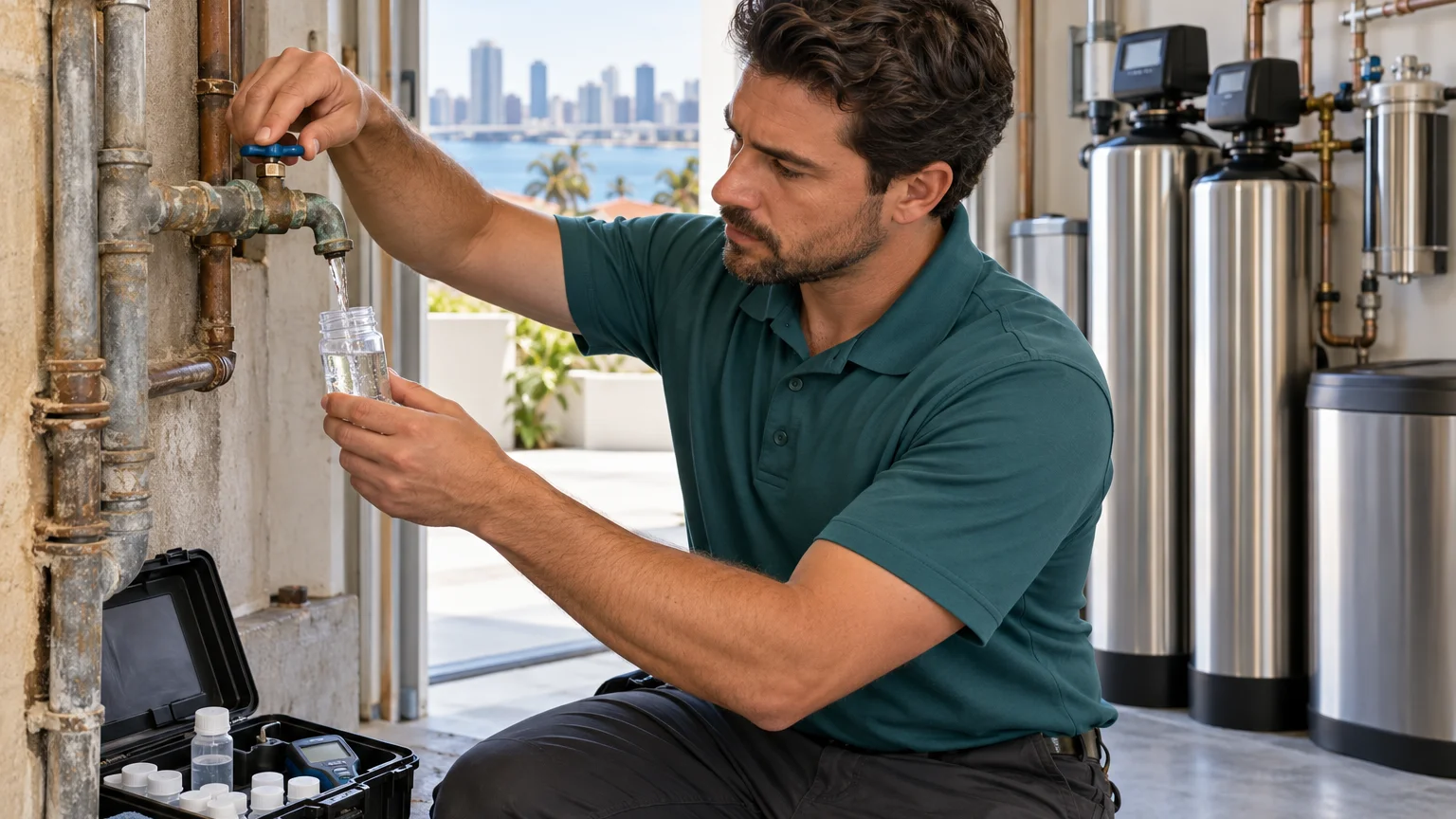
A laboratory result is the clearest way to evaluate the water from a specific tap. Choose the faucet used for drinking and cooking, then tell the laboratory why you’re testing. Don’t collect a casual jar of water before receiving its instructions.
California maintains an Environmental Laboratory Accreditation Program, commonly called ELAP. This page couldn’t confirm the current laboratory directory or the accreditation scope of any named laboratory. Search California’s current ELAP directory, then verify that the laboratory’s active scope covers lead in drinking water.
Ask the laboratory:
- Does your current accreditation cover this exact analysis?
- Do you supply the sample container?
- Do you require a first-draw sample?
- How long must the tap remain unused beforehand?
- Should I submit another sample after flushing?
- Which faucet should I use?
- How should I store and deliver the sample?
- What will the written report include?
First-draw sampling is often discussed in lead investigations, but this page couldn’t verify one universal collection procedure from the approved material. Follow the selected laboratory’s written directions exactly. Changing the resting period, container, faucet, or collection sequence can change what the sample represents.
Don’t remove the faucet aerator or run the water unless the laboratory tells you to. Don’t collect from a hose, refrigerator dispenser, or filtered tap unless that’s the point being evaluated. If you want to compare untreated and filtered water, ask for a sampling plan that keeps those samples distinct.
Clear Water Pros SD can arrange a free in-home water test, but its scope should be confirmed beforehand. An in-home screening isn’t automatically a laboratory lead analysis or a safety clearance. Use an appropriately qualified laboratory when you need a documented lead result.
Understand the result before changing equipment
Read the report with the laboratory and the serving utility. Confirm the units, reporting limit, sample location, collection method, and whether the result was detected or reported below the laboratory’s limit.
This page couldn’t confirm the current federal lead action level from the approved claims ledger. Regulations and utility procedures can change, so don’t copy a threshold from an old article. Check the EPA’s current lead-in-drinking-water guidance and ask your utility how the latest rule applies to household sampling.
A utility action level and a single household result may answer different questions. Ask the laboratory or utility what your result supports. Don’t convert it into a diagnosis for every faucet or neighboring property.
If the result needs follow-up, ask whether another sample should isolate the likely source. A planned comparison may examine different taps or conditions. The laboratory should set that process, including containers and collection order.
Keep the original report. Record the faucet, date, collection conditions, and any plumbing work completed afterward. If a component is replaced or treatment is installed, ask whether confirmation testing is appropriate. A treatment claim isn’t the same as a post-installation laboratory result.
Anyone performing plumbing or filtration installation should provide a written scope. Verify the contractor’s license through the California Contractors State License Board. Clear Water Pros SD makes referrals, while the homeowner contracts with and pays the licensed provider directly.
Compare filters by their exact lead claim
Start with the identified concern, then select the treatment scope. A point-of-use device treats a selected tap. A point-of-entry system treats water entering the residence. Those aren’t interchangeable decisions.
NSF/ANSI 53 covers specified health-effect contaminant claims. Certification under that standard isn’t a performance ranking, and it doesn’t mean every certified model reduces lead. Verify the exact model number and its specific certified reduction claim in the certifier’s current listing.
Check the replacement cartridge too. A housing and cartridge work as a system, so a similar-looking replacement may not carry the same claim. Include replacement-filter cost, availability, maintenance instructions, and rated conditions when comparing ownership.
Don’t assume the pro carries a qualifying model. Clear Water Pros SD hasn’t verified that every partner installs an NSF/ANSI 53 model with a lead-reduction claim. Ask the provider to identify the proposed system, replacement element, certification listing, and written maintenance schedule before signing.
An under-sink drinking water filter may fit a kitchen-only treatment goal. Broader heavy-metals filtration options may also be discussed after testing. Neither page proves that a particular unit fits your result.
Filtration also doesn’t resolve an undocumented pipe. Keep the service-line inquiry, plumbing evaluation, and laboratory report together. That gives the licensed provider a defined problem instead of a vague request for the strongest filter.
When to call us
Call when an older San Diego home has unknown plumbing records, a laboratory lead result, or a need for correctly scoped filtration. We’ll connect you with a separately licensed Water Filtration pro who can review treatment options and provide a written quote.
Call us at (858) 400-4647 to set up a free in-home water test.