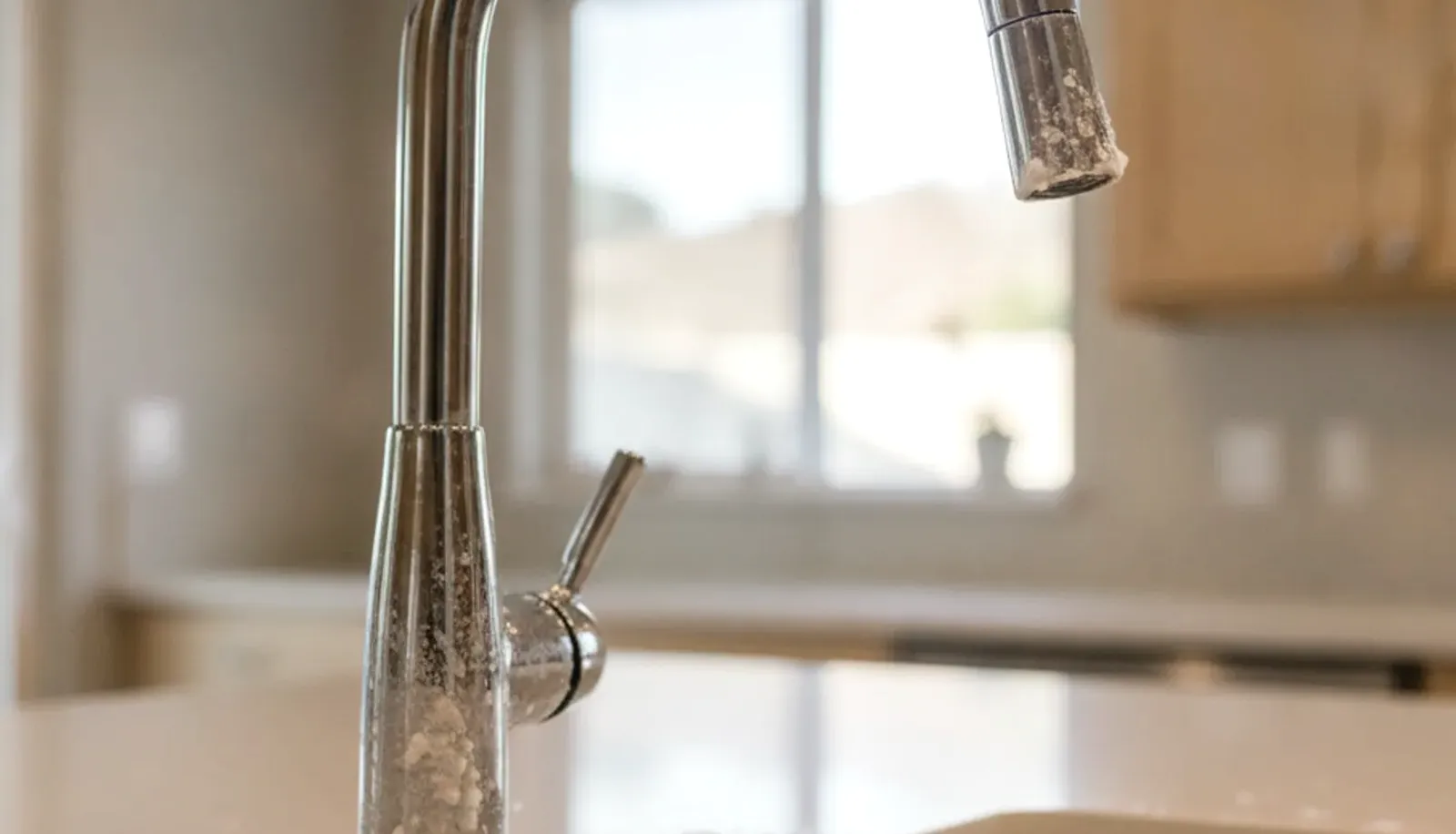
Knowing your mineral levels helps you understand what a technician recommends. You do not need special training to get a rough idea of your water quality. A few simple methods work right in your kitchen. Gathering this information takes less time than washing a load of clothes. Having a number ready makes conversations with professionals much clearer.
The quick soap and bottle check
This approach costs almost nothing and gives a fast general answer. Grab an empty, clean bottle for this quick experiment. Fill it about one third full from your kitchen faucet. Add a few drops of plain liquid castile soap. Avoid detergents or soaps with added ingredients for this method. Cap the bottle and shake it vigorously for roughly ten seconds.
Watch how the liquid reacts after you stop shaking. Soft water creates a thick layer of bubbles that lasts a while. Hard water barely foams and instead looks cloudy. Calcium and magnesium react with the soap rather than letting it lather. This trick separates hard water from soft water in about thirty seconds. It will not provide a specific measurement in grains per gallon. Leftover soap residue or cold water temperatures can skew the outcome. Use it as a starting point rather than a final measurement.
Reading color change test strips
Dip strips offer a visual result based on a provided color chart. Always read the packaging for units, range, expiration date, and directions. Submerge the strip and wait the exact time the manufacturer specifies. Checking the color too early or too late produces unreliable readings.
Compare the resulting color to the included reference chart carefully. Write down the specific band the strip actually matches. Never force a broad color block into a more precise number. If the shade falls outside the chart or looks muddy, try another kit. You might also ask a qualified provider to take a measurement instead. Learn more about what an in-home water test can tell you to understand these results better.
Counting drops with a titration kit
Drop kits rely on a measured sample, specific reagents, and a color shift. Follow the included directions for sample size and chemical order precisely. Mix the liquids as directed and watch for the defined endpoint. Count every drop needed to reach that final color change. Apply the conversion formula supplied for that particular kit and sample volume. One drop does not always equal one grain per gallon across different products.
Write down the kit name, testing location, date, units, and final number. Documented numbers help professionals size equipment much better than vague descriptions. Results exceeding the stated range require a different testing approach. Consider exploring hard water solutions once you have your documented number.
Checking your local utility report
Look at the annual water quality document from your billing provider. The City of San Diego reports its system averages about 16 grains per gallon. That figure typically ranges from 16 to 18 depending on area and demand. These numbers do not represent every district or private well in the county.
Utility data provides helpful background but is not a measurement at your tap. Review the report specific to your address before making decisions. Test directly at your faucet if you need a number for sizing equipment. Residents in North County might want to review hard water treatment in Encinitas for localized context.
Understanding your hardness measurement
Results usually appear in grains per gallon (gpg) or milligrams per liter. EPA homeowner guidance describes water above 7 gpg as hard. Stick to the units and timing outlined in your chosen testing method. A color band cannot support more precision than the kit allows. Our water hardness calculator helps compare reported figures easily.
Retest with a fresh sample if your first result surprises you. Different fixtures showing wildly different readings deserve expert interpretation. Ask your utility or a qualified provider to explain those variations. Do not assume a single cause without proper verification.
Limits of basic home testing
Strips and drop kits only answer the mineral question. They do not prove your water is safe or test for PFAS. Address contaminant worries through a certified laboratory. Your utility or health department can advise which analysis fits your needs.
If you plan to buy a softener, request a free in-home water test to confirm tap hardness. Written proposals should list measured hardness and actual household water use. They must also show the exact model’s documented working capacity and efficiency. Remember that salt-free water conditioning does not remove hardness minerals. Compare any certified treatment claim against your actual goals.
Homeowners in South Bay can explore options like water softener installation in Oceanside or check resources for under-sink water filtration in Chula Vista. Understanding local conditions helps guide your choices.
Frequently asked questions
What level counts as hard water?
EPA homeowner guidance describes water above 7 gpg as hard. Your specific address matters more than a broad countywide average.
Do color strips give accurate numbers?
They provide a useful range when used exactly as directed. Drop kits offer more specific hardness results. Certified laboratories are required for contaminant testing.
Will boiling my water fix the problem?
Boiling is not a practical whole-home hardness treatment. Select equipment based on a measured result and documented claims.
How often should I check again?
Retest when you notice changes or your utility reports a source shift. Private-well contaminant testing should follow health-department guidance.
Is all water in the county equally hard?
No single approved value applies to every utility and private well. Read our article on is San Diego water hard for available provider-specific figures.
Getting expert eyes on your water
Basic home tests give you helpful numbers, but they have limits. A separately licensed professional should evaluate your plumbing if you suspect contamination or need equipment sized correctly. They can interpret complex results and recommend appropriate treatment options.
Call (858) 400-4647 and Clear Water Pros SD will connect you with an independent local water-treatment professional.